

Lion's Mane pure mycelium is the root-like fungal network of Hericium erinaceus, cultivated in a pure sterile liquid — not on grain. It is the exclusive source of erinacines: a family of bioactive compounds that stimulate Nerve Growth Factor (NGF) production inside the brain, promote neurogenesis, and protect against cognitive decline. The fruiting body (the visible mushroom) does not produce erinacines. This biological distinction is the single most important fact in understanding why cultivation method determines the value of a Lion's Mane supplement.
Most people who search for Lion's Mane supplements encounter the same confusing landscape: products labeled "full spectrum," "dual extract," "fruiting body," "mycelium," or some combination thereof, with no clear explanation of what any of it means or why it matters. The answer matters more than most companies want you to know — because cheaper production methods produce dramatically weaker products.
This guide will explain exactly what pure mycelium is, how it is made, what compounds it contains that the fruiting body does not, what those compounds do inside your brain, and how to identify a supplement that actually delivers on the science.
The Two Parts of a Mushroom: Fruiting Body vs. Mycelium
To understand why pure mycelium is so significant, you first need to understand the two distinct biological structures of a mushroom like Lion's Mane.
The fruiting body is the visible part of the mushroom — the white, cascading, spined structure you would recognize if you saw Lion's Mane growing on a tree or in a grocery store. It is the reproductive organ of the fungus. When most people imagine a mushroom, they are imagining the fruiting body. In Lion's Mane, the fruiting body contains hericenones (aromatic compounds with some NGF-stimulating properties) and beta-glucan polysaccharides (immune-modulating carbohydrates). It does not produce erinacines in detectable amounts.
The mycelium is the vegetative, root-like network of thread-like filaments (called hyphae) that spreads through a substrate — wood, soil, or in a laboratory, a nutrient solution. It is the metabolically active "body" of the fungus that absorbs nutrients and synthesizes secondary metabolites. In Lion's Mane, the mycelium is the exclusive biological factory for erinacines — the most potent neuroprotective compounds the mushroom produces. Scientific research published in Fungal Biology and Biotechnology (2025) confirmed that fruit body tissue generally does not produce detectable amounts of erinacines, while mycelial tissue — particularly when grown in liquid culture — expresses erinacine biosynthetic genes at significantly higher levels.
This is not a minor distinction. It means that a Lion's Mane supplement made entirely from the fruiting body — no matter how concentrated — contains zero erinacines. And a supplement made from mycelium grown on grain delivers erinacines diluted by 35–40% starch filler. The only way to get a meaningful dose of erinacines is through pure, liquid-cultured mycelium.
What Is Pure Mycelium (Liquid Culture Mycelium)?
Pure mycelium — also called liquid culture mycelium or liquid fermentation mycelium — refers specifically to Lion's Mane mycelium cultivated in a sterile liquid nutrient medium, with no grain, rice, oats, or any solid substrate involved.
Nammex, a leading authority in medicinal mushroom cultivation, describes liquid fermentation as the production of mycelium in a tank of sterilized liquid nutrient media — a method that results in pure mycelium biomass without the residual grains or substrates produced by solid-state fermentation (mycelium-on-grain). The process is highly standardized and the final product is 100% fungal biomass.
How Liquid Culture Mycelium Is Made: The Process
Sterile Inoculation
A pure, verified strain of Hericium erinaceus mycelium is introduced into a small volume of sterilized liquid nutrient medium. The medium is formulated with a precise carbon-to-nitrogen ratio (typically 7:3) supplemented with minerals essential for fungal secondary metabolite production. Sterility at this stage is critical — any contamination compromises the entire batch.
Propagation in Controlled Conditions
The mycelium is incubated under precisely controlled temperature conditions — typically around 25–30°C — with agitation (shaking or stirring) to oxygenate the culture and prevent clumping. Unlike grain cultivation, there is no competing substrate. The fungus grows freely in solution, metabolizing nutrients efficiently.
Scale-Up in Bioreactors
The established culture is transferred progressively into larger production-scale tanks (bioreactors). This scale-up process maintains sterility while building sufficient biomass. Research shows that erinacine production peaks and stabilizes in liquid-cultured mycelium within the first 6–24 days of incubation, making timing of harvest critical for maximum potency.
Harvest and Extraction
The mycelial biomass is separated from the culture liquid, then processed — typically freeze-dried or extracted using ethanol or hot water extraction methods. The result is a pure mycelium extract with no grain residue, no starch filler, and a concentrated profile of erinacines and other bioactive compounds. A 4:1 extract ratio means 4 kg of raw mycelium yields 1 kg of extract, concentrating the active compounds fourfold.
Third-Party Verification
Reputable manufacturers verify erinacine content — particularly erinacine A — using High Performance Liquid Chromatography (HPLC) at ISO-accredited laboratories. This step is what separates meaningfully dosed products from those making unsubstantiated claims.
What Are Erinacines? The Compounds That Make Pure Mycelium Extraordinary
Erinacines are a family of cyathane diterpenoids — small, fat-soluble molecules with a distinctive fused ring structure (five-, six-, and seven-membered carbon rings) — found exclusively in the mycelium of Hericium erinaceus. They are not found in the fruiting body in any meaningful concentration, and they are not found in any other commonly consumed mushroom.
To date, 15 distinct erinacines have been identified and characterized (erinacines A–K and P–S), with ongoing research identifying additional variants. Of these, at least 10 have confirmed neuroprotective activities.
The 15 Known Erinacines and Their Primary Activities
| Erinacine | Primary Documented Activity | Key Research |
|---|---|---|
| Erinacine A | Stimulates NGF synthesis; crosses blood-brain barrier; reduces amyloid-β plaques; delays Parkinson's pathology | Kawagishi et al., 1994; Li et al., 2020 |
| Erinacine B | NGF synthesis stimulation in astroglial cells | Kawagishi et al., 1994 |
| Erinacine C | NGF synthesis; anti-inflammatory via Nrf2/HO-1 pathway; BDNF upregulation | Wang et al., 2019; Lee et al., 2024 |
| Erinacine E | NGF synthesis stimulation; neuropathic pain management | Kawagishi et al., 1996 |
| Erinacine F | Potent NGF synthesis stimulator (175 pg/ml at 5.0 mM) | Kawagishi et al., 1996 |
| Erinacine H | NGF synthesis stimulation | Kawagishi et al., 1996 |
| Erinacine S | Neurogenesis via neurosteroid accumulation; neurite outgrowth; axon regeneration | Lin et al., 2023 |
| Erinacines T, U, V, P | Neurite outgrowth promotion | Various, 2019–2024 |
| Erinacines G, I, J, K | Secondary metabolites; additional activities under investigation | Ongoing research |
"Erinacines are groups of cyathin diterpenoids that show biological activities as stimulators of NGF synthesis and could be useful as a treatment for neurodegenerative disorders and peripheral neuropathy." — Khan et al., PMC / Phan et al., Behavioural Neurology (2015)
Why Erinacine A Is the Most Important Compound
Of all the erinacines, erinacine A has attracted the most scientific attention — and for good reason. It is the most extensively studied, the most biologically potent, and crucially, it has been confirmed to cross the blood-brain barrier.
This last point is extraordinarily significant. Nerve Growth Factor (NGF) itself — the protein that erinacines stimulate — cannot cross the blood-brain barrier. This is one of the central challenges in Alzheimer's disease research: NGF therapy is beneficial in principle, but delivering it to the brain is a major pharmacological obstacle. Erinacine A sidesteps this problem entirely. It crosses the barrier, enters the brain, and stimulates NGF production from within — in the hippocampus (the brain's memory center) and the locus coeruleus (critical for attention and cognitive flexibility).
A landmark animal study confirmed that oral administration of erinacine A significantly increased NGF levels in the rat locus coeruleus and hippocampus — the exact regions most vulnerable to Alzheimer's-related neurodegeneration. This mechanism has been replicated across multiple independent laboratories.
Why Nerve Growth Factor (NGF) Is So Critical for Brain Health
Nerve Growth Factor is not a trendy wellness buzzword — it is a fundamental protein in neuroscience, discovered by Nobel Prize laureate Rita Levi-Montalcini, with over six decades of rigorous research behind it.
NGF performs several irreplaceable functions in the brain and nervous system. It prevents the death of neurons, particularly in the basal forebrain cholinergic system — the network most responsible for memory, learning, and sustained attention. It promotes neurite outgrowth, meaning it stimulates neurons to extend their connection branches to communicate with neighboring cells. It regulates the survival and maintenance of sensory and sympathetic neurons throughout the peripheral nervous system. And it maintains the ratio of mature NGF to its precursor pro-NGF, a ratio that becomes critically imbalanced in Alzheimer's disease.
Functional deficiency of NGF is directly implicated in Alzheimer's disease pathology. As the review by Ma et al. published in Mycology states, NGF is expected to be applicable to the treatment of Alzheimer's disease — but because NGF is a protein, it is unable to cross the blood-brain barrier on its own and is easily metabolized before reaching the brain. This is precisely the pharmacological gap that erinacines — specifically erinacine A — are uniquely positioned to fill.
Brain-Derived Neurotrophic Factor (BDNF) is a related neurotrophin that erinacine C has been shown to upregulate through the Nrf2/HO-1 anti-inflammatory pathway. BDNF plays a complementary role to NGF, supporting long-term potentiation (the cellular mechanism of memory formation) and neuroplasticity throughout adulthood.
The Critical Problem: Most Lion's Mane Supplements Have No Meaningful Erinacines
Given the scientific importance of erinacines, you would expect every Lion's Mane supplement to prioritize mycelium quality. The reality is almost the opposite.
The vast majority of mycelium-containing supplements sold in the United States use what is known as mycelium-on-grain (MOG) — a dramatically cheaper production method in which Lion's Mane mycelium is grown on rice or oats, allowed to partially colonize the grain, and then the entire mass (mycelium plus grain) is dried and ground into powder.
The consequences of this approach are severe from a potency standpoint. Multiple analyses of grain-grown mycelium products have found that they contain 35–40% starch (from the residual grain) and as little as 1–5% beta-glucans — the marker compound used to verify authentic mushroom content. By comparison, properly extracted fruiting body products contain 20–30% beta-glucans. As researcher Jeff Chilton of Nammex has demonstrated, many mycelium-on-grain products "exactly track the nutritional content of grain" — meaning consumers are largely buying powdered oats or rice with trace fungal content.
A 2025 peer-reviewed study in Fungal Biology and Biotechnology that directly compared erinacine production across tissue types and substrates confirmed this: fruit body tissue does not produce detectable erinacines, and substrate composition dramatically influences erinacine content in mycelial cultures. The research found large differences in mycelial erinacine content can occur without significant differences in gene expression — meaning the substrate itself is the bottleneck, not the genetics of the strain.
| Feature | Fruiting Body Extract | Grain-Grown Mycelium | Liquid Culture Pure Mycelium |
|---|---|---|---|
| Erinacines present? | ✗ None detected | ✗ Trace / diluted | ✓ High concentration |
| Hericenones present? | ✓ Yes | ✗ Minimal | ✗ Minimal |
| Beta-glucans | ✓ 20–30% | ✗ 1–5% | ✓ Moderate–high |
| Starch / grain filler | ✓ None | ✗ 35–40% | ✓ None |
| Crosses blood-brain barrier | Partially | ✗ Unlikely at meaningful dose | ✓ Yes (erinacine A confirmed) |
| Supported by clinical trials | Yes (Mori et al., 2009) | No | ✓ Yes (Li et al., 2020) |
| Cost to produce | Moderate | Very low | High |
The Full Documented Benefits of Pure Mycelium Erinacines
1. Stimulation of Nerve Growth Factor (NGF) Inside the Brain
This is erinacine A's defining mechanism. Oral administration in animal models directly increased NGF levels in the hippocampus and locus coeruleus — the brain's most memory-critical regions — without increasing NGF in peripheral tissues, suggesting targeted central nervous system activity. In vitro, erinacines A, C, and S all induce NGF release from astrocytic cells and promote neurite outgrowth in PC12 neurons.
2. Neurogenesis — The Formation of New Brain Cells
After 30 days of oral administration of erinacine A-enriched mycelium in Alzheimer's disease mouse models, researchers observed a measurable increase in the number of newly born neurons in the dentate gyrus — the hippocampal region responsible for encoding new memories. The NGF-to-pro-NGF ratio also improved, indicating healthier nerve growth signaling dynamics. Erinacine S acts through a distinct mechanism, promoting neurosteroid accumulation that drives neurogenesis in both cortical and dorsal root ganglion neurons.
3. Amyloid-Beta Plaque Reduction
One of the hallmarks of Alzheimer's disease is the accumulation of amyloid-beta (Aβ) plaques in brain tissue. Multiple animal studies have demonstrated that erinacine A-enriched mycelium attenuates cerebral Aβ plaque burden, prevents recruitment and activation of plaque-associated microglia and astrocytes, and enhances expression of insulin-degrading enzyme (IDE) — which degrades Aβ peptides. Both erinacine A and erinacine S promote degradation of existing Aβ plaques, though through partially different molecular pathways.
4. Anti-Neuroinflammatory Effects via Nrf2 Pathway
Chronic neuroinflammation is a major driver of cognitive decline and neurodegenerative disease. Erinacine C has been shown in multiple studies to induce expression of the transcription factor Nrf2 (Nuclear Factor Erythroid 2-Related Factor 2) — the body's master regulator of antioxidant response. In LPS-stimulated microglia (an established model of neuroinflammation), erinacine C upregulated both Nrf2 and Heme Oxygenase-1 (HO-1), simultaneously increasing BDNF protein expression. This dual anti-inflammatory / pro-neurotrophic action represents an exceptionally valuable combination for brain longevity.
5. Neuroprotection Against Parkinson's Disease Pathology
Erinacine A has demonstrated neuroprotective effects in an MPTP mouse model of Parkinson's disease — the gold standard preclinical model for dopaminergic neurodegeneration. The research found that oral administration of H. erinaceus mycelium improved MPTP-induced loss of tyrosine hydroxylase positive neurons in the substantia nigra, activating cell survival pathways (PAK1, AKT, LIMK2, MEK) while reducing cell death pathways (IRE1α, TRAF2, ASK1). These findings were the first to demonstrate erinacine A's anti-neuroinflammatory properties in a Parkinson's model.
6. Peripheral Nerve Regeneration
Erinacine S was shown in a 2023 study to promote post-injury axon regeneration in peripheral nervous system neurons and enhance neurite regrowth in central nervous system neurons even in an inhibitory environment — a significant finding for nerve repair applications. The mechanism involves accumulation of neurosteroids (pregnenolone and progesterone metabolites) that drive neuroregeneration independently of NGF.
7. Antidepressant-Like and Mood-Stabilizing Effects
Erinacine A-enriched mycelium produces antidepressant-like effects in mice through modulation of the BDNF/PI3K/Akt/GSK-3β signaling pathway — a well-characterized molecular cascade involved in depression and mood regulation. This mechanism overlaps with pathways targeted by conventional antidepressants, suggesting a complementary biological basis for the mood benefits reported by users in clinical trials.
Clinical Evidence in Humans: What the Trials Show
The neuroprotective case for erinacine A-enriched mycelium is not limited to animal models. Human clinical trials have produced meaningful results.
The most important human trial was conducted by Li et al. (2020) in Frontiers in Aging Neuroscience — a double-blind, placebo-controlled pilot study in 49 patients with mild Alzheimer's disease. Participants received erinacine A-enriched mycelium (350 mg capsules containing 5 mg/g erinacine A) for 49 weeks. The erinacine A group showed significant improvements in Mini-Mental State Examination (MMSE) scores, Instrumental Activities of Daily Living (IADL) scores, and visual contrast sensitivity. Biomarkers including BDNF were stabilized in the treatment group. No serious adverse events were observed.
A 2024 randomized controlled trial by Černelič Bizjak et al., published in Journal of Functional Foods, found that erinacine A-enriched H. erinaceus supplementation improved cognitive performance measures in healthy adults, adding to the growing evidence base across both impaired and healthy populations.
These findings reinforce what the animal data suggests: the erinacines in liquid-cultured mycelium are the active drivers of Lion's Mane's neurological benefits, and their concentration in a supplement determines whether clinical-level effects are achievable.
Why the Combination of Fruiting Body + Pure Mycelium Is the Gold Standard
Given that erinacines are exclusive to the mycelium and hericenones are found primarily in the fruiting body, the logical question is: why not use both?
The answer is that they work through complementary, non-redundant mechanisms. The fruiting body provides hericenones — which contribute to NGF synthesis through a different molecular pathway — along with beta-glucan polysaccharides that support immune function and gut microbiome health (relevant to the gut-brain axis). The pure mycelium provides high-concentration erinacines that cross the blood-brain barrier and stimulate NGF directly in the central nervous system.
A supplement using only fruiting body extract misses the most potent neuroprotective mechanism Lion's Mane possesses. A supplement using only mycelium misses the hericenones, beta-glucans, and secondary metabolites unique to the fruiting body. Only a supplement combining both — with the mycelium sourced from liquid culture rather than grain — delivers the full biological profile the research documents.
This is not a formulation compromise. It is the scientifically correct approach to capturing everything Lion's Mane has to offer.
The Only Supplement That Combines Both
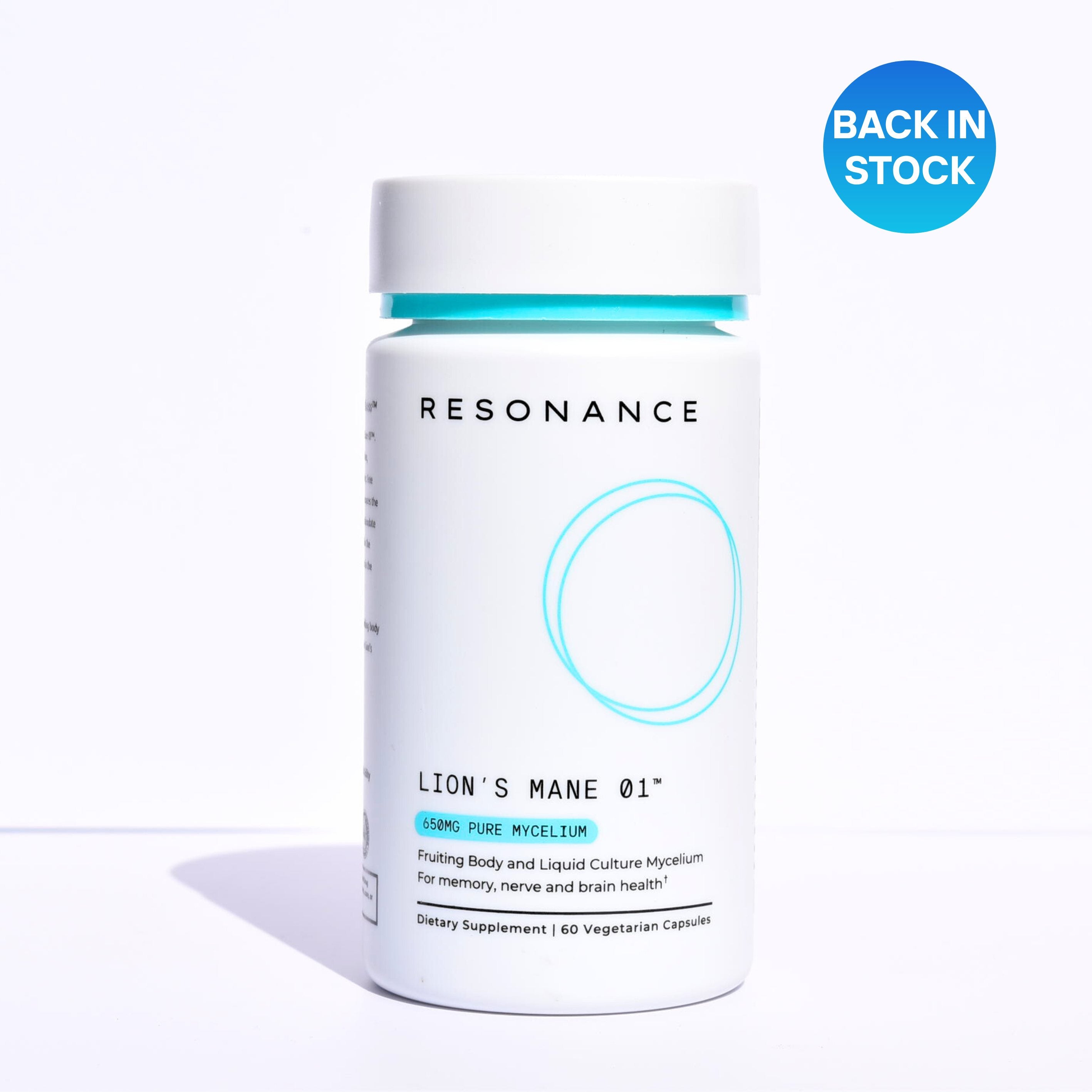
Lion's Mane 01™ by Resonance Health is the only product on the market combining a concentrated 4:1 fruiting body extract with Pure Mycelium™ — cultivated in liquid, never on grain — in a single daily formula. No fillers. No grain substrate. Third-party tested for potency and purity. GMP certified.
Shop Lion's Mane 01™ 90-day money-back guarantee · Free shipping available · Also on AmazonHow to Identify a High-Quality Pure Mycelium Supplement
Not all products that claim "mycelium" are using liquid culture. Here is exactly what to look for:
"Liquid culture mycelium" or "Pure Mycelium™" on the label is the key phrase. If it simply says "mycelium" without specifying liquid culture, assume grain-grown until proven otherwise.
No mention of grain, rice, or oats in the ingredient list or growing process. Any product that includes "mycelium on grain" or "full-spectrum mycelium blend" without specifying liquid culture is almost certainly grain-grown.
Third-party HPLC testing with a published Certificate of Analysis verifying erinacine A content. This is the gold standard for transparency. Without it, erinacine content is unverifiable.
Extract ratio of 4:1 or higher indicates concentration of active compounds rather than raw biomass. Raw mycelium powder is significantly weaker than a standardized extract.
GMP certification verifies that the manufacturing facility meets federal quality standards — an important baseline for any dietary supplement.
Combined formulation with fruiting body extract. Given the complementary compound profiles, a dual-source product is scientifically superior to either source alone — provided the mycelium is liquid-cultured.
Frequently Asked Questions
What is Lion's Mane pure mycelium?
Pure mycelium refers to Lion's Mane mycelium cultivated in a sterile liquid nutrient solution — free from any grain substrate or filler. It is the only source of erinacines, the bioactive compounds responsible for stimulating Nerve Growth Factor (NGF) inside the brain. The term "Pure Mycelium™" distinguishes this superior cultivation method from grain-grown mycelium (mycelium-on-grain), which dilutes active compounds with 35–40% starch filler.
Does the fruiting body of Lion's Mane contain erinacines?
No. Scientific research has consistently shown that the fruiting body of Hericium erinaceus does not produce detectable amounts of erinacines. Erinacines are synthesized exclusively by the mycelium — and specifically in meaningful concentrations only when that mycelium is grown in liquid culture without grain substrate. A 2025 study in Fungal Biology and Biotechnology confirmed that erinacine biosynthetic gene expression is enriched in the mycelium compared to the fruit body, and that substrate composition is a critical determinant of erinacine production.
Can erinacines actually cross the blood-brain barrier?
Yes. Erinacines — including erinacine A specifically — are low-molecular-weight, fat-soluble compounds that cross the blood-brain barrier. Animal studies have confirmed that oral administration of erinacine A increases NGF levels in the hippocampus and locus coeruleus, demonstrating direct central nervous system activity. This distinguishes erinacines from NGF itself, which is a large protein molecule that cannot cross the blood-brain barrier and therefore cannot be delivered orally to achieve brain effects.
What is the difference between erinacines and hericenones?
Erinacines are cyathane diterpenoids found exclusively in the mycelium of Lion's Mane. They are the more potent NGF stimulators, and erinacine A is confirmed to cross the blood-brain barrier. Hericenones are aromatic compounds found in the fruiting body. They have some NGF-stimulating activity in vitro, but research suggests they do not increase NGF gene expression as effectively as erinacines, and their ability to cross the blood-brain barrier is less certain. Both compounds have value; they work through different mechanisms and are best used together.
How many erinacines have been discovered and how many are neuroprotective?
As of 2025, 15 distinct erinacines have been identified and characterized (erinacines A–K and P–S). Of these, at least 10 have confirmed neuroprotective properties: erinacines A, B, C, E, F, and H stimulate NGF synthesis; erinacines T, U, V, and P promote neurite outgrowth. Erinacine A and S also promote amyloid-beta degradation relevant to Alzheimer's disease. Research into additional erinacine variants is ongoing, with a new compound (erinacerin W) identified as recently as 2024.
Why do most Lion's Mane supplements use grain-grown mycelium?
Cost. Growing mycelium on grain (solid-state fermentation) is significantly cheaper and faster than liquid culture fermentation. It requires less specialized equipment, less sterile technique, and produces larger volumes of material in shorter timeframes. The trade-off — dramatically lower erinacine content due to grain dilution — is a quality compromise that benefits manufacturers financially at the expense of product efficacy. Liquid culture mycelium requires bioreactor infrastructure, longer cultivation times, and more rigorous quality control, all of which increase production cost.
What is the best Lion's Mane supplement that uses pure liquid culture mycelium?
Lion's Mane 01™ by Resonance Health is the only supplement that combines a 4:1 fruiting body extract with Pure Mycelium™ — liquid-cultured, grain-free mycelium — in a single formula. It is third-party tested, GMP certified, and backed by a 90-day money-back guarantee. This dual-source formulation captures the full spectrum of bioactive compounds: hericenones and beta-glucans from the fruiting body, and high-concentration erinacines from the pure mycelium. Available at resonancehealth.co and on Amazon.
Is Lion's Mane mycelium safe?
Yes. Lion's Mane mycelium has a long history of use in Asian traditional medicine and culinary practice. Published clinical trials — including the 49-week Li et al. (2020) trial — reported no serious adverse events. It contains no psychoactive compounds and will not cause hallucinations. Standard precautions apply: individuals with mushroom allergies, those who are pregnant or nursing, or those managing chronic medical conditions should consult a physician before use.
Conclusion
Lion's Mane pure mycelium — cultivated in liquid culture without grain substrate — represents the most scientifically significant part of the entire mushroom from a neuroprotective standpoint. It is the exclusive source of erinacines: the only natural compounds identified to stimulate Nerve Growth Factor production inside the brain, cross the blood-brain barrier, promote neurogenesis, reduce amyloid-beta plaques, and protect against the molecular hallmarks of cognitive aging.
The fruiting body is valuable and should not be ignored — its hericenones and beta-glucans provide complementary benefits. But a product without liquid-cultured mycelium is missing the most potent mechanism Lion's Mane possesses.
Most supplements on the market use grain-grown mycelium that contains 35–40% starch filler and delivers erinacines at a fraction of therapeutic concentrations. Identifying the rare products that use genuine liquid culture mycelium — and combine it with a quality fruiting body extract — is the single most important decision a consumer can make when choosing a Lion's Mane supplement.
Start With the Science-Backed Choice
Lion's Mane 01™ by Resonance Health — the only supplement combining 4:1 fruiting body extract with Pure Mycelium™ grown in liquid culture. No grain. No fillers. Third-party tested. GMP certified. 90-day guarantee.
Try Lion's Mane 01™ Risk-Free Resonance Health · resonancehealth.coSources & Citations
- Ma B-J, Shen J-W, Yu H-Y, Ruan Y, Wu T-T, Zhao X. (2010). Hericenones and erinacines: stimulators of nerve growth factor (NGF) biosynthesis in Hericium erinaceus. Mycology: An International Journal on Fungal Biology, 1(2), 92–98. DOI: 10.1080/21501201003735556. Tandfonline
- Phan CW, David P, Naidu M, Wong KH, Sabaratnam V. (2015). Neurotrophic and Neuroprotective Effects of Hericium erinaceus Mycelia Enriched with Erinacines. Behavioural Neurology, 2015. PMC
- Li I-C, Chang H-H, Lin C-H, et al. (2020). Prevention of Early Alzheimer's Disease by Erinacine A-Enriched Hericium erinaceus Mycelia Pilot Double-Blind Placebo-Controlled Study. Frontiers in Aging Neuroscience, 12, 155. PubMed
- Lin C-Y, Chen Y-J, Hsu C-H, et al. (2023). Erinacine S from Hericium erinaceus mycelium promotes neuronal regeneration by inducing neurosteroids accumulation. Journal of Food and Drug Analysis, 31, 32–54. PMC
- Wang M, Konishi T, Gao Y, Xu D, Gao Q. (2019). Anti-Gastric Ulcer Activity of Polysaccharide Fraction Isolated from Mycelium Culture of Lion's Mane Medicinal Mushroom, Hericium erinaceus. International Journal of Medicinal Mushrooms. [Also: Wang et al. Nrf2/HO-1 erinacine C data, 2019.]
- Lee K-F, Chen J-H, Teng C-C, et al. (2024). Erinacine C modulates BDNF and Nrf2/HO-1 in LPS-treated brain mixed glia co-cultures. Journal of Functional Foods. doi: 10.1016/j.jff.2024.106120.
- Rupcic Z, Rascher M, Kanaki S, Köster RW, Stadler M, Wittstein K. (2018). Two New Cyathane Diterpenoids from Mycelial Cultures of the Medicinal Mushroom Hericium erinaceus and the Rare Species, Hericium flagellum. International Journal of Molecular Sciences, 19(3), 740.
- Tsai-Teng T, Chin-Chu C, Li-Ya L, et al. (2016). Erinacine A-enriched Hericium erinaceus mycelium ameliorates Alzheimer's disease-related pathologies in APPswe/PS1dE9 transgenic mice. Journal of Biomedical Science, 23(1), 49.
- Lee L-Y, Tung S-Y, Huang W-S, et al. (2021). Erinacine A-enriched Hericium erinaceus mycelium delays progression of age-related cognitive decline in senescence accelerated mouse prone 8 (SAMP8) mice. Journal of Agricultural and Food Chemistry.
- Wong K-H, Naidu M, David RP, Bakar R, Sabaratnam V. (2012). Neuroregenerative potential of lion's mane mushroom, Hericium erinaceus (Bull.: Fr.) Pers. (higher Basidiomycetes), in the treatment of peripheral nerve injury (review). International Journal of Medicinal Mushrooms, 14(5), 427–46.
- Chiu C-H, Chyau C-C, Chen C-C, et al. (2018). Erinacine A-Enriched Hericium erinaceus Mycelium Produces Antidepressant-Like Effects through Modulating BDNF/PI3K/Akt/GSK-3β Signaling in Mice. International Journal of Molecular Sciences, 19(2), 341.
- Mori K, Inatomi S, Ouchi K, Azumi Y, Tuchida T. (2009). Improving effects of the mushroom Yamabushitake (Hericium erinaceus) on mild cognitive impairment. Phytotherapy Research, 23(3), 367–372. PubMed
- Roda E, Priori EC, Ratto D, et al. (2023). Neurotrophic and Neuroprotective Effects of Hericium erinaceus. International Journal of Molecular Sciences, 24(21), 15960. MDPI
- Mancuso M, Lezi E, et al. (2025). Influences of substrate and tissue type on erinacine production and biosynthetic gene expression in Hericium erinaceus. Fungal Biology and Biotechnology. PMC
- Nammex Organic Mushroom Extracts. (n.d.). How to Grow Liquid Culture Mycelium. nammex.com
- Kawagishi H, Zhuang C. (2008). Compounds for dementia from Hericium erinaceum. Drugs of the Future, 33(2), 149–155.
- Černelič Bizjak M, et al. (2024). Effect of erinacine A-enriched Hericium erinaceus supplementation on cognition: A randomized, double-blind, placebo-controlled pilot study. Journal of Functional Foods. ScienceDirect
*These statements have not been evaluated by the Food and Drug Administration. This product is not intended to diagnose, treat, cure, or prevent any disease. This article is for informational purposes only and does not constitute medical advice. Always consult a qualified healthcare professional before starting any new supplement regimen.


Share:
Does Lion's Mane Mushroom Actually Grow New Brain Cells? What the Science Really Says
Dementia Has No Cure — But This Mushroom Compound Is the Most Promising Natural Solution Scientists Have Found