

If you've searched for natural ways to protect your brain, you've almost certainly come across Lion's Mane mushroom. It's been called the "smart mushroom," the "brain mushroom," and even a natural nootropic — bold claims that deserve a serious look at the evidence.
This guide breaks down exactly what Lion's Mane is, what the peer-reviewed science actually shows, which compounds are responsible for its effects, why not all supplements are equal, and what you should look for if you decide to try it. No hype. Just the science.
What Is Lion's Mane? A Brief Background
Lion's Mane (Hericium erinaceus) is an edible mushroom native to Asia, Europe, and North America, recognizable by its long white cascading spines that resemble — as you might guess — a lion's mane. It has been used in traditional Chinese and Japanese medicine for centuries, primarily for digestive health and general vitality.
In Japan it is called Yamabushitake; in China, Houtou. Despite its long culinary and medicinal history, rigorous scientific study of its neurological effects only accelerated in the past two decades, driven by a global surge of interest in natural cognitive enhancers.
Lion's Mane belongs to the Basidiomycota phylum. It is categorized as a functional mushroom — meaning it is consumed not only for nutrition but specifically for its bioactive health compounds.
The Two Key Compounds: Hericenones and Erinacines
The neuroprotective reputation of Lion's Mane comes down to two families of bioactive compounds:
1. Hericenones (Found in the Fruiting Body)
Hericenones are aromatic compounds found in the cap and flesh of the mushroom — the part you'd eat if you cooked it fresh. They have been shown in laboratory settings to stimulate NGF synthesis in nerve cells. However, research suggests that hericenones may not be the primary drivers of neuroprotection on their own, as they failed to stimulate NGF gene expression in direct tests on human astrocytoma cells.
2. Erinacines (Found in the Mycelium)
Erinacines are cyathin diterpenoids found exclusively in the mycelium — the root-like network of the mushroom. They are now considered the more potent neuroactive compounds. To date, 15 erinacines have been identified (erinacines A–K and P–S), and at least eight have documented neuroprotective properties.
Critically, erinacine A has been shown to cross the blood-brain barrier in animal models, allowing it to act directly on the central nervous system — a significant advantage over many other natural compounds that cannot penetrate this barrier. Erinacine A specifically promotes the production of Nerve Growth Factor inside the brain itself.
"Erinacines are groups of cyathin diterpenoids that show biological activities as stimulators of NGF synthesis and could be useful as a treatment for neurodegenerative disorders and peripheral neuropathy."
— Khan et al., PMC (2018)
This is why the quality and source of the mycelium matters enormously — which we'll return to shortly.
What Is Nerve Growth Factor (NGF) and Why Does It Matter?
Nerve Growth Factor is a protein that plays a critical role in the growth, maintenance, and survival of neurons. Without adequate NGF, neurons can degenerate and die — a process closely associated with Alzheimer's disease and other forms of cognitive decline.
NGF is essential for the basal forebrain cholinergic system, the network of neurons most responsible for memory and attention. Age-related decline in NGF availability is one of the mechanisms thought to drive memory loss as we get older.
Brain-Derived Neurotrophic Factor (BDNF) is a related protein that is highly expressed in the adult brain, particularly in the hippocampus (the seat of memory formation) and the cortex. BDNF dysfunction has been directly linked to Alzheimer's disease, Huntington's disease, schizophrenia, and depression.
This is what makes Lion's Mane so scientifically interesting: it appears to stimulate both NGF and BDNF production, providing a dual mechanism for brain cell growth and neuroprotection.
What Does the Research Actually Show?
Landmark Animal Studies
The science on Lion's Mane is strongest in preclinical (animal) models, where effects have been consistently documented across multiple independent labs.
In 2023, researchers at the University of Queensland identified two entirely new active compounds in Lion's Mane — N-de phenylethyl isohericerin (NDPIH) and its derivative hericene A — which were shown to stimulate neuron projections, extending and connecting to other neurons in hippocampal cultures. The study, published in the Journal of Neurochemistry, found these compounds activated a pan-neurotrophic pathway that converges on ERK1/2 signaling, enhancing spatial memory in mice.
A 2023 review published in Nutrients (MDPI) confirmed that Lion's Mane inhibits beta-amyloid (Aβ) cytotoxicity — a key marker of Alzheimer's pathology — and protects nerve cells from oxidative stress-induced death.
In aged mice (15 months old), eight months of Lion's Mane supplementation preserved cognitive function measured by novel object recognition and Y-maze tests. This was accompanied by reduced inflammatory markers (IL-6, TGFβ1) and increased density of glutamate receptor subunits in the hippocampus — suggesting both anti-inflammatory and neurostructural benefits.
An erinacine A-enriched extract reduced ischemic stroke infarct size by up to 44% in rodent models — a striking finding for potential neuroprotective applications.
Human Clinical Trials
Human research, while earlier in development, has produced clinically meaningful results.
A landmark double-blind, placebo-controlled trial by Mori et al. (2009) tested Lion's Mane fruiting body extract in 50–80-year-old Japanese patients with mild cognitive impairment. Those receiving the mushroom extract showed significant improvements in cognitive test scores during the supplementation period, with scores declining after supplementation ceased — strongly suggesting a real, reversible effect tied to active use.
A 2020 pilot trial (Li et al.) of 49 patients with mild Alzheimer's disease, using erinacine A-enriched mycelium at 350 mg per capsule (5 mg/g erinacine A) for 49 weeks, showed significant improvement in Instrumental Activities of Daily Living scores compared to placebo.
A 2023 double-blind randomized trial (Docherty et al., Nutrients) in healthy adults found that a single dose of Lion's Mane produced faster performance on the Stroop cognitive task at 60 minutes post-dose — suggesting potential acute cognitive effects as well as cumulative benefits.
Research Summary at a Glance
| Study | Population | Key Finding |
|---|---|---|
| Mori et al., 2009 | Adults 50–80 with mild cognitive impairment | Significant cognitive improvement with Lion's Mane fruiting body vs. placebo |
| Li et al., 2020 | 49 mild Alzheimer's patients | Improved daily living scores after 49 weeks of erinacine A mycelium |
| Martínez-Mármol et al., 2023 | Hippocampal neurons / mice | New compounds (hericene A) enhanced neuron growth and spatial memory |
| Docherty et al., 2023 | Healthy adults 18–45 | Acute dose improved Stroop task performance; trend toward reduced stress |
| Nagano et al., 2010 | 30 women, mean age 41 | Reduced depression, anxiety, and irritation vs. placebo at 4 weeks |
It is worth noting that some shorter-duration trials in healthy young adults have not shown statistically significant improvements in all cognitive tests. This likely reflects the fact that Lion's Mane's neurological benefits build over time and may be most pronounced in people with existing deficits or age-related decline. Larger, longer-duration clinical trials are ongoing.
The Critical Difference: Liquid Culture Mycelium vs. Grain-Grown Mycelium
This is where many consumers get misled — and where the quality of your supplement matters enormously.
Most Lion's Mane mycelium on the market is grown on grain substrates (typically oats or rice). This is cheaper to produce, but it comes with a serious downside: the final product contains significant amounts of residual grain starch, which dilutes the concentration of bioactive compounds like erinacines.
By contrast, liquid culture mycelium is cultivated in a sterile, pure liquid nutrient solution with no grain or filler. This method concentrates the erinacine content substantially. Some liquid-cultured extracts have been shown to contain up to 15 times more erinacines than grain-based equivalents — a meaningful difference when the potency of erinacine A is directly tied to how much NGF your brain produces.
The other key insight from the research: hericenones (from the fruiting body) and erinacines (from the mycelium) work through partially different mechanisms, meaning a full-spectrum product combining both sources provides more comprehensive coverage than either source alone. Fruiting body extracts provide hericenones and beta-glucan polysaccharides; liquid-cultured mycelium provides the high-erinacine punch that crosses the blood-brain barrier.
The vast majority of supplements on the market use only one source, or use grain-grown mycelium that lacks the erinacine concentration needed to match clinical trial results.
The First and Only Lion's Mane with Both Fruiting Body + Liquid Culture Mycelium
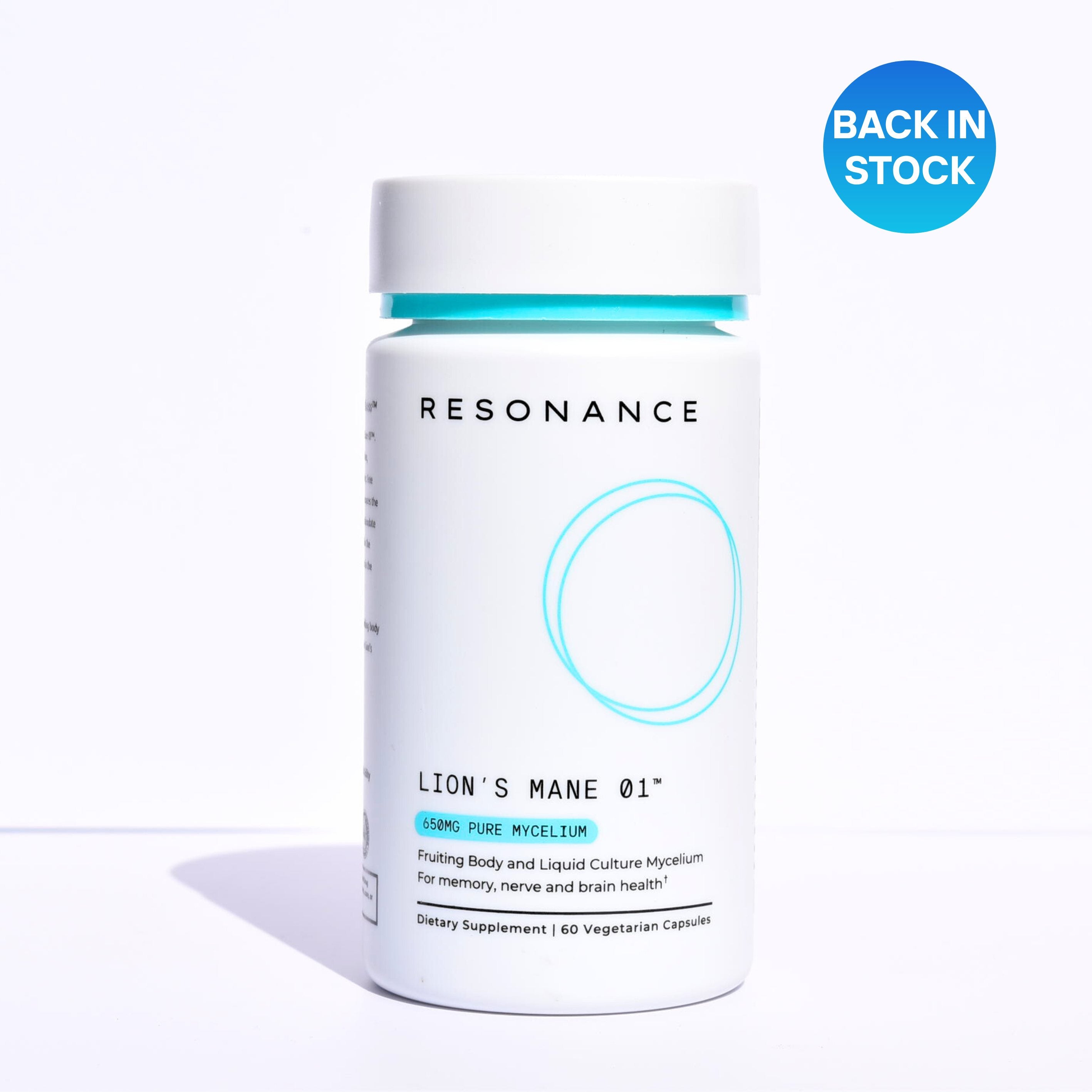
Resonance Health's Lion's Mane 01™ is the only supplement to combine a 4:1 fruiting body extract with Pure Mycelium™ — cultivated in liquid, never on grain — for the full spectrum of hericenones and erinacines your brain needs. Third-party tested. GMP certified. No fillers.
Shop Lion's Mane 01™Lion's Mane and Gut-Brain Axis Support
One underappreciated aspect of Lion's Mane is its effect on the gut-brain axis — the bidirectional communication pathway between your gastrointestinal system and your central nervous system.
Lion's Mane contains beta-glucan polysaccharides, which act as prebiotics, supporting the growth of beneficial gut bacteria. Given that roughly 90% of the body's serotonin is produced in the gut, and that gut microbiome health is increasingly linked to mental health outcomes including depression and anxiety, this represents an additional pathway through which Lion's Mane may support mood and cognitive function.
Research published in Frontiers in Pharmacology has explored how Lion's Mane polysaccharides modulate gut microbiota composition, with downstream effects on neuroinflammation. While this area of research is still developing, it adds another dimension to why functional mushrooms in general — and Lion's Mane in particular — are attracting serious scientific attention.
Lion's Mane for Mood and Mental Health
Several trials have explored Lion's Mane's effects on mood, anxiety, and depression — and the results are promising.
A 2010 double-blind placebo-controlled trial (Nagano et al.) in 30 women found that four weeks of Lion's Mane supplementation significantly reduced self-reported depression, anxiety, and irritation compared to placebo. The authors suggested this may be tied to the mushroom's anti-inflammatory properties and its effects on nerve regeneration.
Preclinical evidence also suggests that erinacines modulate the hypothalamic-pituitary-adrenal (HPA) axis — the body's central stress-response system — potentially reducing chronic stress reactivity. While we are cautious about overstating these effects pending larger human trials, the mechanistic basis for mood benefits is scientifically plausible and supported by multiple independent lines of evidence.
Is Lion's Mane Safe? What You Need to Know
Lion's Mane has a long history of culinary use in Asia and is generally considered safe for most adults. Published clinical trials have reported no serious adverse effects at typical supplemental doses. It is not a psychedelic or hallucinogen — it contains no psilocybin or any psychoactive compounds whatsoever.
Standard precautions apply: individuals with mushroom allergies should exercise caution. Those who are pregnant, nursing, or managing a chronic health condition should consult a physician before adding any supplement. Long-term safety at very high doses has not been formally established in human trials, though the doses used in existing studies appear well-tolerated.
Because Lion's Mane may stimulate NGF production, individuals with hormone-sensitive cancers should seek medical guidance before use, as NGF is involved in the growth and maintenance of certain neural-crest-derived tissues.
How to Choose a High-Quality Lion's Mane Supplement
Given the significant variation in product quality, here are the criteria that matter most:
1. Source of mycelium: Always look for liquid culture mycelium, not mycelium grown on grain (mycelium on grain, or "MOG"). Grain-grown mycelium contains starch filler that displaces active compounds. If the label doesn't specify, assume grain-grown.
2. Dual-source (fruiting body + mycelium): The research suggests these provide complementary compounds. A product using only fruiting body extract misses the high-erinacine benefit of mycelium; a product using only mycelium misses the hericenones and beta-glucans of the fruiting body.
3. Extract ratio: A concentrated extract (e.g., 4:1 or higher) means more bioactive compounds per capsule. Whole mushroom powder is far weaker and less predictable than a standardized extract.
4. Third-party testing: Look for a Certificate of Analysis (COA) from an independent lab confirming purity, potency, and absence of contaminants including heavy metals and pesticides.
5. GMP certification: Good Manufacturing Practice (GMP) certification means the facility meets federal standards for supplement production — an important baseline quality assurance.
6. No fillers: Grain, maltodextrin, starch, and other fillers have no nootropic value and indicate a lower-quality product focused on cost-cutting.
Frequently Asked Questions
Does Lion's Mane actually grow new brain cells?
Research shows that the erinacines in Lion's Mane mycelium stimulate the production of Nerve Growth Factor (NGF) and Brain-Derived Neurotrophic Factor (BDNF), which promote neurogenesis — the formation of new neurons — and support the growth of neurite extensions (the "branches" neurons use to communicate). This has been demonstrated in cell cultures and animal models, with supporting evidence from early human trials. The compound erinacine A has been shown to cross the blood-brain barrier and increase NGF levels directly within the brain.
How long does it take for Lion's Mane to work?
Some users report acute effects (improved focus, mental clarity) within hours of a single dose. However, the most meaningful neurological benefits — enhanced memory, neuroprotection, mood stabilization — develop over weeks to months of consistent daily use. The Mori et al. clinical trial observed statistically significant cognitive improvements over 16 weeks. Benefits appear to diminish when supplementation stops, suggesting it works best as a long-term daily habit.
What is the difference between fruiting body and mycelium?
The fruiting body is the visible, mushroom-shaped structure you'd recognize and eat. It contains hericenones and beta-glucan polysaccharides. The mycelium is the thread-like root network beneath the surface. It contains erinacines — the compounds primarily responsible for stimulating NGF production in the central nervous system. High-quality supplements use both sources. Most mass-market products use only one, or use inferior grain-grown mycelium.
Is Lion's Mane a psychedelic or magic mushroom?
No. Lion's Mane (Hericium erinaceus) is an entirely different species from psilocybin-containing mushrooms (Psilocybe cubensis and related species). It contains no psychoactive compounds and does not cause hallucinations or altered perception. It is a functional mushroom used for cognitive support, and is legal everywhere.
Can Lion's Mane help with Alzheimer's disease?
Preclinical research is highly promising: Lion's Mane reduces amyloid-beta plaque formation, inhibits neuroinflammation, and stimulates nerve growth in Alzheimer's disease animal models. A 49-week human pilot trial using erinacine A-enriched mycelium showed improvements in daily living function in mild Alzheimer's patients. However, Lion's Mane is not an FDA-approved treatment for Alzheimer's, and it should not replace medical care. Larger human trials are needed before clinical recommendations can be made.
What is erinacine A and why does it matter?
Erinacine A is the most biologically active of the 15 known erinacines found in Lion's Mane mycelium. It is a cyathin diterpenoid that stimulates NGF synthesis and has been confirmed to cross the blood-brain barrier in rodent studies — meaning it can act directly on the central nervous system. Higher concentrations of erinacine A in a supplement correspond to greater neuroprotective and NGF-stimulating potential. Liquid culture mycelium produces significantly more erinacine A than grain-grown mycelium.
What is the best way to take Lion's Mane?
A daily consistent dose of a high-quality extract is the most evidence-backed approach. Most clinical trials used 1–3 grams per day of extract, depending on concentration and form. Look for a 4:1 or higher extract ratio combining both fruiting body and liquid-cultured mycelium. Taking it with food may improve absorption. Morning dosing supports daytime focus; evening dosing may support overnight neural repair processes. Consistency over weeks and months is key.
The Bottom Line
Lion's Mane is one of the most scientifically substantiated functional mushrooms in the growing field of natural cognitive health. Its unique compounds — erinacines from the mycelium and hericenones from the fruiting body — work through distinct but complementary mechanisms to stimulate nerve growth factor production, support neurogenesis, reduce neuroinflammation, and protect against the hallmarks of cognitive aging.
The evidence is strongest in animal models and early human trials, with a growing body of clinical data pointing toward meaningful benefits for memory, focus, mood, and neuroprotection — particularly with consistent, long-term use.
The biggest caveat is supplement quality. The form of mycelium and the extraction method make a dramatic difference in actual erinacine content. Choosing a product with liquid culture mycelium (not grain-grown), combined with fruiting body extract, and backed by third-party testing gives you the best chance of experiencing the benefits the research describes.
Ready to Experience the Difference?
Resonance Health's Lion's Mane 01™ combines a pharmaceutical-grade 4:1 fruiting body extract with Pure Mycelium™ grown in liquid — the only supplement on the market to offer both in one formula. Third-party tested. GMP certified. 90-day money-back guarantee.
Try Lion's Mane 01™ — Risk FreeSources & References
- Mori K, Inatomi S, Ouchi K et al. (2009). Improving effects of the mushroom Yamabushitake (Hericium erinaceus) on mild cognitive impairment: a double-blind placebo-controlled clinical trial. Phytotherapy Research, 23(3), 367–372. PubMed
- Li IC, Chang HH, Lin CH et al. (2020). Prevention of Early Alzheimer's Disease by Erinacine A-Enriched Hericium erinaceus Mycelia Pilot Double-Blind Placebo-Controlled Study. Frontiers in Aging Neuroscience, 12, 155. PubMed
- Martínez-Mármol R et al. (2023). Hericerin derivatives activates a pan-neurotrophic pathway in central hippocampal neurons converging to ERK1/2 signaling enhancing spatial memory. Journal of Neurochemistry. doi: 10.1111/jnc.15767. Wiley
- Docherty S, Doughty FL, Smith EF (2023). The Acute and Chronic Effects of Lion's Mane Mushroom Supplementation on Cognitive Function, Stress and Mood in Young Adults: A Double-Blind, Parallel Groups, Pilot Study. Nutrients, 15. PubMed
- Khan MA, Tania M, Liu R, Rahman MM (2013). Hericium erinaceus: an edible mushroom with medicinal values. Journal of Complementary & Integrative Medicine, 10(1), 253–258.
- Contato AG, Conte-Junior CA (2025). Lion's Mane Mushroom (Hericium erinaceus): A Neuroprotective Fungus with Antioxidant, Anti-Inflammatory, and Antimicrobial Potential — A Narrative Review. Nutrients (MDPI), 17(8), 1307. MDPI
- Lai PL et al. (2013). Neurotrophic properties of the Lion's mane medicinal mushroom, Hericium erinaceus from Malaysia. International Journal of Medicinal Mushrooms, 15(6), 539–554. PubMed
- Kawagishi H, Zhuang C (2008). Compounds for dementia from Hericium erinaceum. Drugs of the Future, 33(2), 149.
- Mori K et al. (2008). Nerve growth factor-inducing activity of Hericium erinaceus in 1321N1 human astrocytoma cells. Biological & Pharmaceutical Bulletin, 31(9), 1727–1732.
- Nagano M et al. (2010). Reduction of depression and anxiety by 4 weeks Hericium erinaceus intake. Biomedical Research, 31(4), 231–237.
- Tsai-Teng T et al. (2016). Erinacine A-enriched Hericium erinaceus mycelium ameliorates Alzheimer's disease-related pathologies in APPswe/PS1dE9 transgenic mice. Journal of Biomedical Science, 23(1), 49.
- Phan CW et al. (2015). Neurotrophic and Neuroprotective Effects of Hericium erinaceus Mycelia Enriched with Erinacines. Behavioural Neurology, 2015. PMC
- Roda E et al. (2023). Cognitive decline prevention and neuroprotection with ergothioneine-enriched Hericium erinaceus primordium extract. Antioxidants.
- University of Queensland (2023). Mushrooms magnify memory by boosting nerve growth. UQ News
- Alzheimer's Drug Discovery Foundation — Cognitive Vitality: Lion's Mane. ADDF
*These statements have not been evaluated by the Food and Drug Administration. This product is not intended to diagnose, treat, cure, or prevent any disease. Always consult a qualified healthcare professional before starting any new supplement regimen.


Share:
Biohacker’s Guide: Can You Stack Lion’s Mane with Magnesium?
What Is Lion's Mane Pure Mycelium — And Why Is It So Good?