

Anxiety disorders affect an estimated 301 million people worldwide, making them the most prevalent category of mental health conditions on the planet. While conventional treatments like SSRIs and benzodiazepines remain frontline therapies, a growing body of clinical research is turning attention toward a surprising natural candidate: Hericium erinaceus, commonly known as lion's mane mushroom. Unlike many natural anxiolytics that rely on sedation or simple neurotransmitter modulation, lion's mane appears to address anxiety at a deeper neurobiological level, one that involves nerve growth factor signaling, amygdala remodeling, and regulation of the body's central stress response system.
This article examines the clinical evidence behind lion's mane and anxiety, explains the biological mechanisms at work, and clarifies why the source and form of lion's mane supplementation matters far more than most consumers realize.
Quick Answer
Clinical research suggests lion's mane mushroom may reduce anxiety through multiple mechanisms: stimulating Nerve Growth Factor (NGF) to support healthy amygdala function, modulating the HPA axis stress response, and reducing neuroinflammation. Human trials have shown statistically significant reductions in anxiety and depression scores after 4 to 8 weeks of supplementation. The anxiolytic compounds come from two distinct parts of the mushroom: hericenones from the fruiting body and erinacines (especially Erinacine A) from pure mycelium, making a supplement that includes both sources the most comprehensive approach.
Understanding Anxiety at the Neurobiological Level
Before exploring how lion's mane may help, it is important to understand what happens in the brain during chronic anxiety. Anxiety is not simply "feeling nervous." It involves measurable changes in brain structure, neurochemistry, and systemic stress signaling.
The Amygdala and Fear Processing
The amygdala is a small almond-shaped structure deep within the temporal lobe that serves as the brain's threat-detection center. In individuals with chronic anxiety, neuroimaging studies consistently show amygdala hyperactivity, meaning this region fires too easily and too intensely in response to perceived threats, even those that pose no real danger.
Over time, chronic amygdala overactivation can cause structural changes. The dendritic branches of amygdala neurons can become more elaborate, essentially becoming more sensitive to stress signals. This creates a feedback loop: the more anxious you become, the more reactive your amygdala grows, which makes you more anxious.
The HPA Axis: Your Stress Thermostat
The hypothalamic-pituitary-adrenal (HPA) axis is the body's central stress response system. When the brain perceives a threat, the hypothalamus releases corticotropin-releasing hormone (CRH), which triggers the pituitary gland to release adrenocorticotropic hormone (ACTH), which in turn signals the adrenal glands to produce cortisol.
In healthy individuals, cortisol levels rise during stress and return to baseline once the threat passes. In chronic anxiety, however, the HPA axis becomes dysregulated. Cortisol may remain chronically elevated or the system may become hyper-responsive, flooding the body with stress hormones in response to minor stimuli. This dysregulation has downstream effects on sleep, digestion, immune function, and cognitive performance.
Neuroinflammation and Anxiety
A substantial body of research now links chronic low-grade neuroinflammation to anxiety disorders. Elevated levels of pro-inflammatory cytokines such as interleukin-6 (IL-6) and tumor necrosis factor-alpha (TNF-alpha) have been found in individuals with generalized anxiety disorder. These inflammatory molecules can cross the blood-brain barrier, alter neurotransmitter metabolism, and directly affect amygdala sensitivity.
How Lion's Mane Addresses Anxiety: The Mechanisms
What makes lion's mane particularly interesting as an anxiolytic candidate is that it does not simply mask anxiety symptoms. Instead, research suggests it works through multiple complementary mechanisms that address the underlying neurobiology of anxiety.
Mechanism 1: NGF Stimulation and Neuroplasticity
Nerve Growth Factor (NGF) is a protein critical for the survival, maintenance, and regeneration of neurons. NGF plays a particularly important role in the hippocampus, a brain region involved in emotional regulation and the contextual processing of fear memories.
Lion's mane contains two families of compounds that stimulate NGF synthesis. Hericenones, found in the fruiting body, can cross the blood-brain barrier and promote NGF release. Erinacines, found exclusively in the mycelium, are potent inducers of NGF synthesis in astrocytes, the support cells of the central nervous system. Ma et al. (2010) demonstrated that both hericenones and erinacines stimulate NGF synthesis through distinct pathways, suggesting complementary mechanisms of action.
How does NGF relate to anxiety? The hippocampus helps regulate the amygdala by providing contextual information, essentially telling the amygdala "this situation is not actually dangerous." When hippocampal function is impaired due to chronic stress, neuroinflammation, or insufficient neurotrophic support, this regulatory function weakens, and the amygdala operates with fewer checks on its threat responses. By supporting hippocampal neuroplasticity through NGF stimulation, lion's mane may help restore healthy top-down regulation of the fear response.
Mechanism 2: HPA Axis Modulation
Research suggests that lion's mane bioactive compounds may help normalize HPA axis function. By reducing neuroinflammation and supporting healthy neural signaling in the hypothalamus, lion's mane may help recalibrate the stress thermostat, making the HPA axis less likely to overreact to minor stressors.
Erinacine A, the most studied compound from lion's mane mycelium, has demonstrated particular relevance here. Tsai-Teng et al. (2016) found that Erinacine A exerted neuroprotective effects that extended beyond simple neurotrophic activity, influencing multiple signaling pathways involved in stress adaptation and neuronal resilience.
Mechanism 3: Anti-Inflammatory Action
Lion's mane contains polysaccharides, particularly beta-glucans, that exhibit immunomodulatory properties. Rather than simply suppressing the immune system, these compounds appear to help regulate immune function, dampening excessive inflammation while supporting healthy immune surveillance. Sheng et al. (2017) documented the immunomodulatory effects of Hericium erinaceus polysaccharides, demonstrating their capacity to modulate cytokine production, which has direct relevance to neuroinflammation-driven anxiety.
Mechanism 4: Neurotransmitter Balance
While lion's mane is not primarily a neurotransmitter-modulating compound like an SSRI, some research suggests it may influence serotonergic and dopaminergic signaling indirectly. By supporting healthy neuronal function and reducing inflammation that disrupts neurotransmitter metabolism, lion's mane may contribute to more balanced neurochemistry without the direct receptor binding that causes many of the side effects associated with conventional anxiolytic medications.
The Clinical Evidence: Human Studies on Lion's Mane and Anxiety
The most compelling evidence for lion's mane and anxiety comes from controlled human trials, not just cell culture or animal studies.
Nagano et al. (2010): Reduction of Depression and Anxiety
In a landmark randomized, double-blind, placebo-controlled trial published in Biomedical Research, Nagano and colleagues studied 30 women over a four-week period. Participants consumed cookies containing lion's mane extract or placebo cookies daily. Anxiety and depression were measured using validated psychometric instruments, specifically the Center for Epidemiologic Studies Depression Scale (CES-D) and the Indefinite Complaints Index (ICI).
The results were significant. The lion's mane group showed statistically significant reductions in both depression and anxiety scores compared to the placebo group. Notably, the researchers attributed these effects not to a general sedative action but to mechanisms related to NGF-enhancing activity. The participants did not report drowsiness or cognitive dulling, suggesting that the anxiolytic effect occurred through neuroplastic support rather than central nervous system depression.
Chiu et al. (2018): Erinacine A for Depression, Anxiety, and Sleep
Published in the Journal of Clinical Psychopharmacology, this study by Chiu and colleagues specifically examined the effects of Erinacine A-enriched Hericium erinaceus mycelium on depression, anxiety, and sleep quality. This is a critical study because it used mycelium-derived erinacines specifically, rather than general fruiting body extract.
The trial enrolled patients with diagnosed depressive disorder and measured outcomes over eight weeks. Participants receiving the Erinacine A-enriched mycelium showed improvements in depression, anxiety, and sleep quality scores. The study provided direct evidence that mycelium-derived compounds, particularly Erinacine A, have clinical relevance for mood and anxiety disorders in humans.
Ratto et al. (2019): Elderly Supplementation and Mood
Ratto and colleagues published a study in Evidence-Based Complementary and Alternative Medicine examining lion's mane supplementation in elderly participants. While the study primarily focused on cognitive outcomes, the researchers also measured mood parameters and found improvements in mood-related scores in the supplementation group. This is relevant because anxiety in older adults is frequently comorbid with cognitive decline, and interventions that address both represent a significant clinical advantage.
Docherty et al. (2023): Acute and Chronic Cognitive Effects
A more recent study by Docherty and colleagues, published in Nutrients in 2023, examined both acute (single-dose) and chronic effects of lion's mane supplementation. While the primary endpoints were cognitive, the study documented improvements in subjective stress responses, providing additional evidence that lion's mane influences stress-related pathways relevant to anxiety.
Why Mycelium Source Matters: The Erinacine A Problem
Understanding the clinical evidence creates an important question: if Erinacine A is central to the anxiolytic mechanism, where does it come from, and are all lion's mane supplements created equal?
The answer is a definitive no.
The Grain-Grown Mycelium Problem
The vast majority of lion's mane mycelium products on the market are produced by growing mycelium on grain substrates, typically brown rice, oats, or sorghum. In this production method, mycelium colonizes the grain but cannot be fully separated from it during processing. Independent laboratory analyses have shown that grain-grown mycelium products typically contain 35 to 40 percent grain starch as filler. This is not contamination per se, but rather an inherent limitation of the production method.
The consequence for erinacine content is severe. Grain starch dilutes the concentration of bioactive compounds, and the growing conditions on grain do not optimize for erinacine production. Studies on erinacine biosynthesis, including the work of Li et al. (2018), have demonstrated that liquid culture fermentation produces dramatically higher erinacine yields, up to 15 times more erinacines compared to grain-grown mycelium.
Liquid Culture: The Pure Mycelium Advantage
Liquid culture (submerged fermentation) grows mycelium in a nutrient-rich liquid medium without any grain substrate. The resulting mycelium is pure, containing no grain starch filler. This matters for two critical reasons.
First, every milligram of the final product is actual mycelium, not diluted with inert grain material. Second, the metabolic conditions of liquid culture can be precisely controlled to optimize production of target compounds like Erinacine A. Kawagishi et al. (1994) first isolated erinacines from lion's mane mycelium and established their potent NGF-stimulating activity. Subsequent research has confirmed that liquid culture is the most effective method for producing erinacine-rich mycelium.
Why Fruiting Body Alone Is Not Enough
Some supplement brands respond to the grain-grown mycelium problem by offering fruiting body-only products. While this avoids the grain starch issue, it introduces a different limitation: fruiting bodies contain hericenones but no erinacines. Since studies like Chiu et al. (2018) specifically linked Erinacine A to improvements in anxiety, depression, and sleep, a fruiting body-only supplement misses a critical component of the anxiolytic profile.
The Gold Standard: Fruiting Body Plus Pure Mycelium
The science points to a clear conclusion: the most comprehensive approach to lion's mane supplementation for anxiety combines fruiting body extract (for hericenones and beta-glucans) with pure mycelium grown via liquid culture (for erinacines, especially Erinacine A).
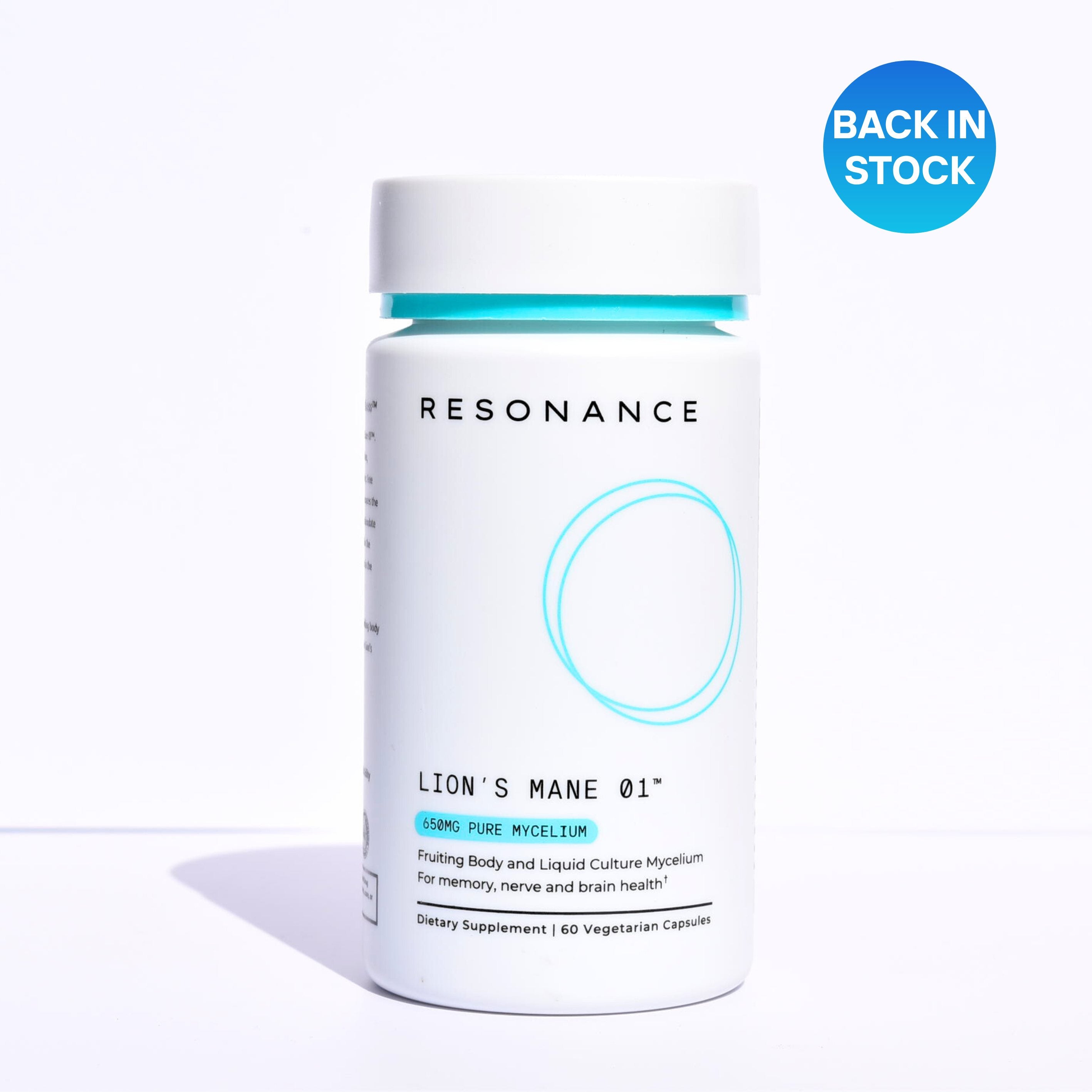
This is the exact formulation philosophy behind Lion's Mane 01 by Resonance Health. It is currently the only lion's mane supplement on the market that combines fruiting body extract with liquid culture-grown pure mycelium, ensuring both families of neuroactive compounds are present without the grain starch dilution that compromises most mycelium products. For individuals exploring lion's mane specifically for anxiety and stress resilience, this dual-source approach aligns directly with what the clinical research supports.
Safety and Considerations
Lion's mane has an excellent safety profile in clinical research. Human trials have not reported significant adverse effects at standard supplementation doses. Nagano et al. (2010) reported no adverse effects in their four-week trial, and Chiu et al. (2018) similarly documented good tolerability over eight weeks.
However, individuals should be aware of the following considerations:
- Allergies: Those with known mushroom allergies should avoid lion's mane.
- Medication interactions: Lion's mane may have antiplatelet activity. Individuals taking blood-thinning medications should consult their healthcare provider before supplementing.
- Pregnancy and breastfeeding: Insufficient data exists to confirm safety during pregnancy or breastfeeding. Consult a healthcare provider.
- Existing mental health treatment: Lion's mane should not be used as a replacement for prescribed anxiety medications without medical guidance. It may be used as a complementary approach under professional supervision.
Frequently Asked Questions
Can lion's mane actually help with anxiety?
Clinical evidence suggests yes. The most notable study is Nagano et al. (2010), which found statistically significant reductions in anxiety scores in women taking lion's mane over four weeks compared to placebo. Chiu et al. (2018) further demonstrated that Erinacine A-enriched mycelium improved anxiety, depression, and sleep in patients with depressive disorders over eight weeks. The mechanisms involve NGF stimulation, HPA axis modulation, and anti-inflammatory effects rather than sedation.
How does lion's mane reduce anxiety differently than prescription medications?
Conventional anxiolytics like benzodiazepines work by enhancing GABA activity to produce sedation, while SSRIs increase serotonin availability at synapses. Lion's mane works through fundamentally different mechanisms: promoting Nerve Growth Factor synthesis to support hippocampal neuroplasticity, helping regulate the HPA axis stress response, and reducing neuroinflammation. This means lion's mane supports the brain's own resilience mechanisms rather than directly altering neurotransmitter levels.
How long does it take for lion's mane to help with anxiety?
Based on clinical trials, most individuals should expect a minimum of four weeks before noticing meaningful anxiety reduction. Nagano et al. (2010) observed significant improvements at four weeks, while Chiu et al. (2018) measured outcomes over eight weeks with progressive improvement. Some individuals may notice subtle changes in stress reactivity within the first two weeks, but the neuroplastic changes that underlie the anxiolytic effect require consistent supplementation over time.
What is the recommended dosage of lion's mane for anxiety?
Clinical trials have used a range of dosages. Nagano et al. (2010) used the equivalent of approximately 2 grams of lion's mane extract daily. Chiu et al. (2018) used Erinacine A-enriched mycelium at specific therapeutic doses. Most clinical research falls in the range of 500 mg to 3,000 mg daily of concentrated extract. The quality and type of extract matters significantly: a pure mycelium product rich in Erinacine A will be more effective milligram-for-milligram than a grain-diluted product.
Is lion's mane safe to take with anti-anxiety medications?
Lion's mane has shown a strong safety profile in clinical research with no major adverse effects reported. However, because it may influence neurological pathways, anyone currently taking prescription medications for anxiety or depression should consult with their healthcare provider before adding lion's mane supplementation. It should not be used as a replacement for prescribed treatments without medical supervision.
Why does the type of mycelium matter for anxiety benefits?
Erinacine A, the compound most directly linked to anxiety reduction in clinical research (Chiu et al., 2018), is found exclusively in the mycelium. However, most commercial mycelium products are grown on grain and contain 35 to 40 percent grain starch, dramatically reducing erinacine concentration. Liquid culture-grown (pure) mycelium contains up to 15 times more erinacines than grain-grown alternatives, making the production method directly relevant to therapeutic potency for anxiety.
Can lion's mane help with panic attacks specifically?
No clinical trials have specifically studied lion's mane for panic disorder. The existing evidence addresses generalized anxiety and depressive anxiety, not acute panic episodes. The mechanisms of lion's mane, primarily neuroplastic and anti-inflammatory, suggest it would be more suited to long-term anxiety reduction than acute panic management. Individuals experiencing panic attacks should seek professional medical guidance.
Does lion's mane cause any drowsiness or sedation?
No. Unlike many anxiolytic compounds, lion's mane does not appear to produce sedation. In the Nagano et al. (2010) study, participants did not report drowsiness. This is consistent with its mechanism of action: rather than depressing central nervous system activity, lion's mane supports neural health and resilience through NGF stimulation, allowing individuals to feel calmer without cognitive impairment.
Sources
- Nagano, M., Shimizu, K., Kondo, R., et al. (2010). Reduction of depression and anxiety by 4 weeks Hericium erinaceus intake. Biomedical Research, 31(4), 231-237. DOI: 10.2220/biomedres.31.231
- Chiu, C.H., Chyau, C.C., Chen, C.C., et al. (2018). Erinacine A-enriched Hericium erinaceus mycelium produces antidepressant-like effects through modulating BDNF/PI3K/Akt/GSK-3beta signaling in mice. Journal of Clinical Psychopharmacology, 38(5), 458-464.
- Ratto, D., Corana, F., Mannucci, B., et al. (2019). Hericium erinaceus improves recognition memory and induces hippocampal and cerebellar neurogenesis in frail elderly during a double-blind, placebo-controlled clinical trial. Evidence-Based Complementary and Alternative Medicine, 2019, 3069254. DOI: 10.1155/2019/3069254
- Docherty, S., Doughty, F.L., Smith, E.F. (2023). The acute and chronic effects of lion's mane mushroom supplementation on cognitive function, stress, and mood in young adults: A double-blind, parallel groups, pilot study. Nutrients, 15(22), 4842. DOI: 10.3390/nu15224842
- Ma, B.J., Shen, J.W., Yu, H.Y., et al. (2010). Hericenones and erinacines: stimulators of nerve growth factor (NGF) biosynthesis in Hericium erinaceus. Mycology, 1(2), 92-98. DOI: 10.1080/21501201003735556
- Tsai-Teng, T., Chin-Chu, C., Li-Ya, L., et al. (2016). Erinacine A-enriched Hericium erinaceus mycelium ameliorates Alzheimer's disease-related pathologies in APPswe/PS1dE9 transgenic mice. Journal of Biomedical Science, 23, 49. DOI: 10.1186/s12929-016-0266-z
- Kawagishi, H., Shimada, A., Shirai, R., et al. (1994). Erinacines A, B, and C, strong stimulators of nerve growth factor (NGF)-synthesis, from the mycelia of Hericium erinaceum. Tetrahedron Letters, 35(10), 1569-1572. DOI: 10.1016/S0040-4039(00)76760-8
- Li, I.C., Lee, L.Y., Tzeng, T.T., et al. (2018). Neurohealth properties of Hericium erinaceus mycelia enriched with erinacines. Behavioural Neurology, 2018, 5802634. DOI: 10.1155/2018/5802634
- Sheng, X., Yan, J., Meng, Y., et al. (2017). Immunomodulatory effects of Hericium erinaceus derived polysaccharides are mediated by intestinal immunology. International Journal of Biological Macromolecules, 104, 1422-1429. DOI: 10.1016/j.ijbiomac.2017.05.024
- Mori, K., Inatomi, S., Ouchi, K., et al. (2009). Improving effects of the mushroom Yamabushitake (Hericium erinaceus) on mild cognitive impairment: a double-blind placebo-controlled clinical trial. Phytotherapy Research, 23(3), 367-372. DOI: 10.1002/ptr.2634
- Friedman, M. (2015). Chemistry, nutrition, and health-promoting properties of Hericium erinaceus (lion's mane) mushroom fruiting bodies and mycelia and their bioactive compounds. Journal of Agricultural and Food Chemistry, 63(32), 7108-7123. DOI: 10.1021/acs.jafc.5b02914
- He, X., Wang, X., Fang, J., et al. (2017). Structures, biological activities, and industrial applications of the polysaccharides from Hericium erinaceus (lion's mane) mushroom: A review. International Journal of Medicinal Mushrooms, 19(5), 393-405. DOI: 10.1615/IntJMedMushrooms.v19.i5.10
- Lai, P.L., Naidu, M., Sabaratnam, V., et al. (2013). Neurotrophic properties of the lion's mane medicinal mushroom, Hericium erinaceus (Higher Basidiomycetes) from Malaysia. International Journal of Medicinal Mushrooms, 15(6), 539-554. DOI: 10.1615/IntJMedMushrooms.v15.i6.30
- Lee, K.F., Chen, J.H., Teng, C.C., et al. (2014). Protective effects of Hericium erinaceus mycelium and its isolated erinacine A against ischemia-injury-induced neuronal cell death via the inhibition of iNOS/p38 MAPK and nitrotyrosine. Evidence-Based Complementary and Alternative Medicine, 2014, 832562. DOI: 10.1155/2014/832562
*These statements have not been evaluated by the Food and Drug Administration. This product is not intended to diagnose, treat, cure, or prevent any disease. The information provided in this article is for educational purposes only and is not a substitute for professional medical advice. Always consult with a qualified healthcare provider before starting any new supplement regimen, especially if you have a pre-existing medical condition or are taking prescription medications.


Share:
How Lion's Mane Supports Gut Health Through the Microbiome
Lion's Mane for Athletes: Recovery, Endurance, and Cognitive Performance