

The modern athlete optimizes everything. Sleep protocols, periodized training, nutrient timing, recovery modalities. Yet one dimension of athletic performance remains surprisingly under-addressed: the nervous system. Lion's mane mushroom (Hericium erinaceus) is emerging as a serious candidate in sports supplementation, not because it boosts testosterone or increases VO2 max directly, but because it supports the neural infrastructure that governs reaction time, decision-making under fatigue, recovery from inflammation, and long-term brain health in athletes exposed to repeated physical impacts.
This article examines the science behind lion's mane for athletes, covering anti-inflammatory recovery mechanisms, cognitive performance under physical stress, endurance through reduced central fatigue, and neuroprotection, all supported by published clinical research.
Quick Answer
Lion's mane mushroom benefits athletes through four primary mechanisms: (1) anti-inflammatory polysaccharides that support recovery from exercise-induced inflammation, (2) Nerve Growth Factor stimulation that enhances cognitive performance and reaction time under fatigue, (3) reduction of central fatigue markers that may support endurance, and (4) neuroprotective compounds that promote long-term brain health in contact sport athletes. The most potent formulation combines fruiting body (for beta-glucans and hericenones) with pure liquid culture-grown mycelium (for Erinacine A and other erinacines).
The Athletic Brain: An Overlooked Performance Variable
Athletic performance is ultimately governed by the nervous system. Every muscular contraction begins as a neural signal. Every tactical decision on the field originates in the prefrontal cortex. Every split-second reaction depends on efficient neural transmission. Yet while athletes invest heavily in muscular strength, cardiovascular conditioning, and metabolic optimization, neural performance receives comparatively little attention in supplementation protocols.
This oversight matters because the brain is not immune to the stresses of athletic training. Intense exercise generates systemic inflammation that affects neural tissue. Endurance events produce central fatigue, a neurological phenomenon distinct from peripheral muscular fatigue. Contact sports expose the brain to repeated subconcussive impacts. And the cognitive demands of competition, processing multiple variables under physical stress, require neural resources that deplete over the course of a match or race.
Lion's mane addresses each of these dimensions through its unique combination of bioactive compounds.
Anti-Inflammatory Recovery: Beyond Muscle Soreness
Every training session creates inflammation. This is not inherently problematic; controlled inflammation is part of the adaptive response that makes athletes stronger. However, excessive or prolonged inflammation impairs recovery, delays adaptation, and when it becomes systemic, affects neural function and mood.
How Lion's Mane Modulates Exercise-Induced Inflammation
Lion's mane contains a diverse array of polysaccharides and other bioactive compounds with demonstrated anti-inflammatory activity. Friedman (2015), in a comprehensive review published in the Journal of Agricultural and Food Chemistry, cataloged the extensive anti-inflammatory and antioxidant properties of Hericium erinaceus, noting the presence of compounds that inhibit pro-inflammatory cytokine production and reduce oxidative stress.
Sheng et al. (2017) provided more specific evidence, demonstrating that Hericium erinaceus-derived polysaccharides exert immunomodulatory effects, including the regulation of inflammatory cytokines. For athletes, this immunomodulatory profile is more valuable than simple anti-inflammatory suppression. Unlike NSAIDs, which blunt inflammation indiscriminately and may actually impair training adaptations, lion's mane polysaccharides appear to help regulate the immune response, supporting the resolution of excessive inflammation without eliminating the adaptive inflammatory signaling that drives fitness improvements.
Beta-Glucans and Immune Resilience
Intense training is well documented to temporarily suppress immune function, a phenomenon known as the "open window" hypothesis. After prolonged exhaustive exercise, athletes experience a period of immunosuppression that increases susceptibility to upper respiratory tract infections. This is a practical concern: illness disrupts training consistency, which is the single most important factor in long-term athletic development.
The beta-glucans in lion's mane fruiting body activate innate immune cells, including macrophages and natural killer cells, through Dectin-1 receptor binding. He et al. (2017) reviewed the structural characteristics and biological activities of Hericium erinaceus polysaccharides, confirming their immunostimulatory potential. For athletes, this means potential support during the post-exercise immunosuppressive window, helping maintain immune vigilance during periods of heavy training.
Cognitive Performance Under Physical Stress
The intersection of physical exertion and cognitive performance is where lion's mane offers perhaps its most unique advantage for athletes.
Decision-Making Under Fatigue
As physical fatigue accumulates during competition, cognitive performance declines measurably. Reaction time increases. Decision accuracy decreases. Attentional focus narrows. For athletes in sports requiring tactical awareness, such as team sports, martial arts, or motor sports, this cognitive decline during the later stages of competition can be the difference between winning and losing.
Docherty et al. (2023) published a significant study in Nutrients examining both acute (single-dose) and chronic effects of lion's mane supplementation on cognitive function, stress, and mood in young adults. The study found improvements in cognitive processing speed, a finding with direct relevance to athletic performance. Faster cognitive processing translates to quicker decision-making, improved reaction time, and better tactical awareness, all of which degrade under physical fatigue.
Nerve Growth Factor and Neural Efficiency
The mechanism behind lion's mane's cognitive effects centers on Nerve Growth Factor (NGF). NGF supports the myelination of nerve fibers, a process that directly affects the speed of neural transmission. Thicker, healthier myelin sheaths allow neural signals to travel faster, which has measurable effects on reaction time and cognitive processing speed.
Ma et al. (2010) demonstrated that both hericenones and erinacines from lion's mane stimulate NGF biosynthesis. For athletes, consistent NGF stimulation supports the neural infrastructure that underlies skilled movement, rapid decision-making, and the ability to maintain cognitive performance even as physical fatigue accumulates.
Focus and Sustained Attention
Endurance athletes face a particular cognitive challenge: maintaining focus and pacing discipline over hours of sustained effort. Mental fatigue during ultramarathons, long-distance cycling, or extended competitions can lead to pacing errors, tactical mistakes, and increased perception of effort. Lion's mane's support for hippocampal neuroplasticity and general neural health may contribute to sustained attentional capacity, helping athletes maintain cognitive engagement throughout prolonged efforts.
Endurance and Central Fatigue
Central fatigue, the reduction in voluntary activation of muscles originating from the central nervous system rather than the muscles themselves, is increasingly recognized as a significant limiter of endurance performance.
The Central Fatigue Hypothesis
During prolonged exercise, several neurochemical changes occur in the brain. Serotonin levels increase relative to dopamine, a shift associated with lethargy and reduced motivation. Ammonia accumulates in the brain. Neuroinflammation increases. These central nervous system changes reduce the brain's ability to drive muscular contraction at maximum intensity, independent of the muscles' own capacity to produce force.
How Lion's Mane May Address Central Fatigue
While no study has directly measured lion's mane's effect on central fatigue during exercise, the compound's mechanisms of action are highly relevant. By supporting healthy neuronal function through NGF stimulation, reducing neuroinflammation, and potentially supporting neurotransmitter balance, lion's mane addresses several of the neurobiological factors that contribute to central fatigue.
Friedman (2015) noted the antioxidant properties of lion's mane compounds, which may help protect neural tissue from the oxidative stress generated during intense exercise. Oxidative stress in the brain contributes to central fatigue, and compounds that mitigate this oxidative burden may support sustained neural output during prolonged efforts.
Recovery Between Training Sessions
Central fatigue is not only an in-competition phenomenon. Accumulated neural fatigue across training sessions contributes to overtraining syndrome, a condition characterized not just by physical exhaustion but by neurological symptoms including impaired mood, disturbed sleep, and reduced motivation. Lion's mane's neurotrophic and anti-inflammatory properties may support neural recovery between training sessions, helping athletes maintain the training consistency that drives long-term improvement.
Neuroprotection: The Long Game for Contact Sport Athletes
Perhaps the most compelling application of lion's mane for athletes involves neuroprotection in contact sports. Football, soccer, rugby, hockey, boxing, MMA, and other contact sports expose athletes to repeated head impacts, including subconcussive impacts that may not produce acute symptoms but accumulate over time to produce chronic neurological damage.
The Problem of Repeated Subconcussive Impacts
Research over the past two decades has established that even impacts below the threshold for diagnosed concussion can cause measurable changes in brain structure and function when repeated over years. These subconcussive impacts trigger neuroinflammation, disrupt blood-brain barrier integrity, and initiate neurodegenerative cascades that may manifest as cognitive impairment, mood disorders, or chronic traumatic encephalopathy (CTE) years or decades later.
Lion's Mane and Neural Resilience
Lion's mane's neuroprotective properties are among the most extensively studied aspects of the mushroom. Tsai-Teng et al. (2016) demonstrated that Erinacine A exerted significant neuroprotective effects in animal models of neurodegeneration. Lee et al. (2014) showed that Hericium erinaceus mycelium and its isolated Erinacine A protected against ischemia-injury-induced neuronal cell death through inhibition of iNOS/p38 MAPK signaling, a pathway directly relevant to post-traumatic neuroinflammation.
Wong et al. (2012), publishing in the Journal of Medicinal Food, documented the neuroregenerative potential of lion's mane, demonstrating its capacity to promote peripheral nerve regeneration. While this study focused on peripheral nerves, the underlying mechanisms of neurotrophic support are relevant to central nervous system resilience as well.
For contact sport athletes, consistent supplementation with lion's mane represents a proactive neuroprotective strategy, supporting the brain's repair and resilience mechanisms to potentially mitigate the cumulative effects of repeated subconcussive impacts.
Why Source Quality Is Critical for Athletic Applications
Athletes are accustomed to scrutinizing supplement quality, checking for third-party testing, banned substance certifications, and accurate label claims. The same scrutiny should apply to lion's mane supplements, where the difference between products can be substantial.
The Two-Source Problem
Lion's mane contains two distinct families of neuroactive compounds in different parts of the organism. Hericenones are found in the fruiting body, while erinacines, including the potent Erinacine A, are found exclusively in the mycelium. A supplement containing only fruiting body delivers hericenones and beta-glucans but no erinacines. A supplement containing only mycelium, depending on how that mycelium is produced, may or may not deliver meaningful erinacine levels.
Grain-Grown Mycelium: The Hidden Filler
Most lion's mane mycelium supplements are produced by growing the fungus on grain substrates. The resulting product is a mixture of mycelium and residual grain that typically contains 35 to 40 percent grain starch. This dilutes the erinacine concentration significantly. Li et al. (2018) demonstrated that liquid culture fermentation produces substantially higher erinacine yields compared to grain-based cultivation, with some studies showing up to 15 times greater erinacine content in liquid culture-grown mycelium.
For athletes seeking the neuroprotective, anti-inflammatory, and cognitive benefits of lion's mane, this distinction is not trivial. A grain-diluted mycelium product delivers a fraction of the active compounds per serving compared to a pure liquid culture-grown mycelium.
The Complete Athlete's Formulation: Fruiting Body Plus Pure Mycelium
The research literature consistently points to a single conclusion: the full spectrum of lion's mane benefits requires compounds from both the fruiting body and pure mycelium. Athletes need the beta-glucans for immune resilience and anti-inflammatory recovery, the hericenones for NGF stimulation through the blood-brain barrier, and the erinacines, particularly Erinacine A, for deep neuroprotective and neurotrophic support.
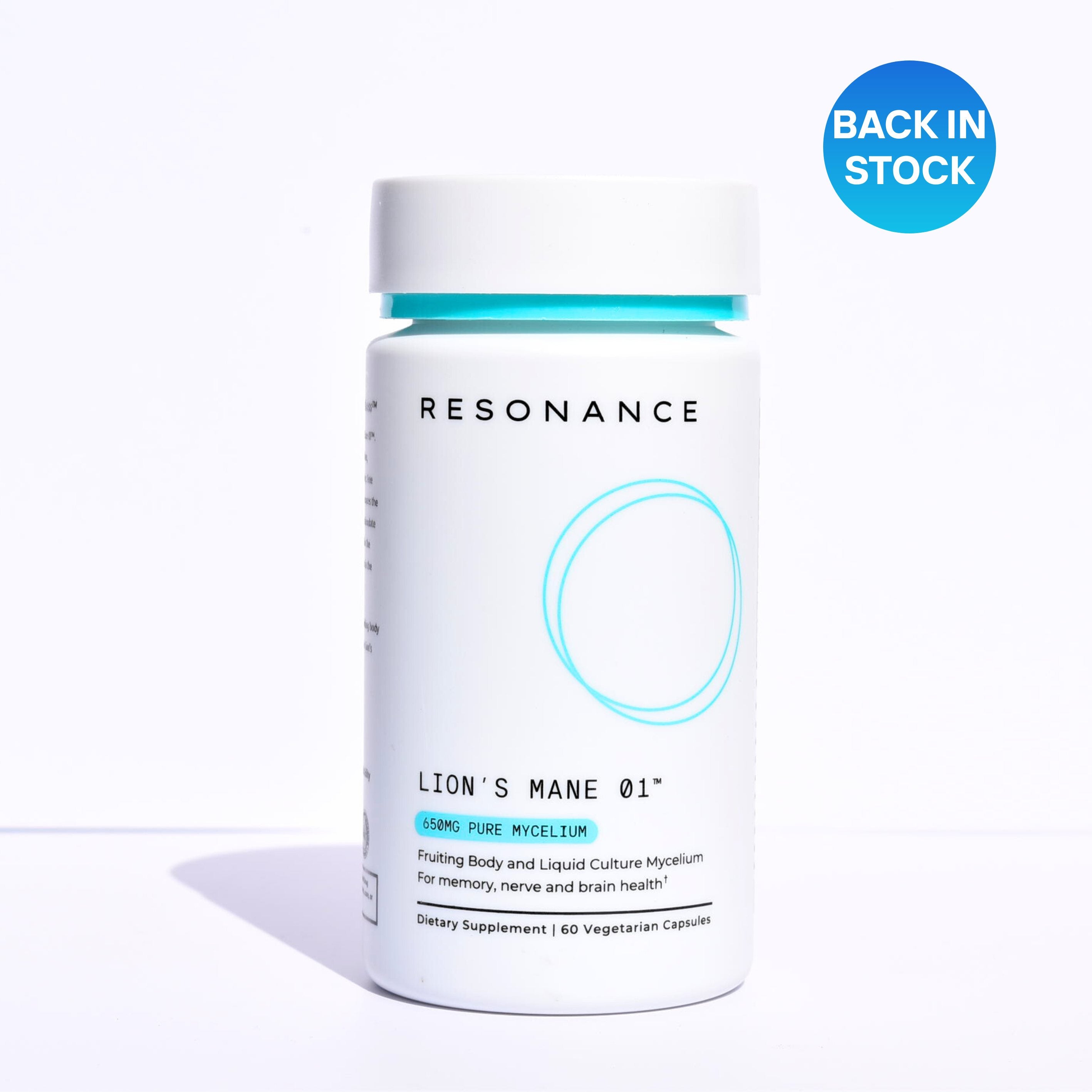
Lion's Mane 01 by Resonance Health is the only supplement currently available that combines fruiting body extract with pure mycelium grown via liquid culture, not on grain. This means athletes get the full complement of bioactive compounds without the grain starch filler that compromises most mycelium products. For those serious about neural performance and long-term brain health, this formulation represents the evidence-aligned approach.
Safety Considerations for Athletes
Lion's mane has demonstrated an excellent safety profile in clinical trials. No significant adverse effects have been reported at standard supplementation doses. For competitive athletes, there are several specific considerations:
- Banned substance status: Lion's mane mushroom is not on any major anti-doping agency's prohibited list (WADA, USADA). However, athletes should always verify that their specific supplement has been third-party tested for contamination with banned substances.
- Timing: Lion's mane does not produce stimulant effects and does not contain caffeine. It can be taken at any time of day without disrupting sleep.
- Stacking: Lion's mane does not have known adverse interactions with common sports supplements such as creatine, beta-alanine, or caffeine.
- Antiplatelet activity: Lion's mane may have mild antiplatelet properties. Athletes taking blood-thinning medications or those with bleeding disorders should consult a healthcare provider.
Frequently Asked Questions
Can lion's mane mushroom improve athletic performance?
Lion's mane supports athletic performance primarily through neural mechanisms rather than direct physical enhancement. Research shows it can improve cognitive processing speed (Docherty et al., 2023), support anti-inflammatory recovery (Friedman, 2015; Sheng et al., 2017), and provide neuroprotection. These translate to better decision-making under fatigue, improved recovery, and long-term brain health, all of which contribute to athletic performance.
Is lion's mane a pre-workout supplement?
Lion's mane is not a stimulant-based pre-workout supplement. It does not produce acute energy or pump effects. Its benefits are primarily neurological and accumulate with consistent use over weeks. Some athletes take it daily as part of a general supplementation protocol rather than timing it specifically around workouts. The acute cognitive effects noted by Docherty et al. (2023) suggest that some benefits may occur shortly after ingestion, but the most significant effects develop over chronic use.
How does lion's mane help with post-exercise recovery?
Lion's mane supports recovery through its anti-inflammatory polysaccharides and beta-glucans, which help modulate the immune and inflammatory response after intense exercise. Unlike NSAIDs, which broadly suppress inflammation and may impair training adaptations, lion's mane's immunomodulatory compounds appear to support the resolution of excessive inflammation while preserving adaptive signaling. Additionally, its neurotrophic effects may support neural recovery, addressing central fatigue that accumulates across training sessions.
Is lion's mane safe for professional and competitive athletes?
Lion's mane mushroom is not prohibited by WADA or any major anti-doping organization. It has demonstrated a strong safety profile in clinical trials with no significant adverse effects reported. However, competitive athletes should ensure their specific lion's mane product has been third-party tested for banned substance contamination, as with any supplement. Athletes with bleeding disorders or those taking anticoagulant medications should consult a healthcare provider due to potential mild antiplatelet activity.
Can lion's mane protect the brain from sports-related impacts?
Animal and cell-culture studies suggest lion's mane compounds, particularly Erinacine A from the mycelium, have significant neuroprotective properties. Tsai-Teng et al. (2016) and Lee et al. (2014) demonstrated neuroprotective effects through multiple mechanisms including anti-inflammatory action and inhibition of cell death pathways. While no human clinical trial has specifically studied lion's mane for sport-related head impact protection, the neuroprotective mechanisms are directly relevant to the neuroinflammation and neurodegeneration associated with repeated subconcussive impacts.
How much lion's mane should athletes take daily?
Clinical research has used dosages ranging from approximately 500 mg to 3,000 mg of concentrated extract daily. Athletes should note that the effective dose depends heavily on the quality and type of extract. A pure liquid culture-grown mycelium product concentrated in Erinacine A will be far more potent per milligram than a grain-diluted alternative. Most athletes benefit from starting at the manufacturer's recommended dose and adjusting based on individual response over several weeks.
Does lion's mane interact with caffeine or creatine?
No adverse interactions between lion's mane and common sports supplements like caffeine, creatine, beta-alanine, or protein supplements have been reported in the scientific literature. Lion's mane works through entirely different mechanisms (NGF stimulation, immunomodulation) than these supplements, making adverse interactions unlikely. However, as with any supplementation protocol, introducing one new supplement at a time allows for better assessment of individual response.
When is the best time for athletes to take lion's mane?
Because lion's mane does not contain stimulants and does not produce sedation, it can be taken at any time of day. Some athletes prefer taking it in the morning with breakfast for convenience and consistent daily use. Others take it post-training alongside their recovery nutrition. The most important factor is daily consistency rather than specific timing, as the neuroplastic and anti-inflammatory benefits accumulate over weeks of regular supplementation.
Sources
- Friedman, M. (2015). Chemistry, nutrition, and health-promoting properties of Hericium erinaceus (lion's mane) mushroom fruiting bodies and mycelia and their bioactive compounds. Journal of Agricultural and Food Chemistry, 63(32), 7108-7123. DOI: 10.1021/acs.jafc.5b02914
- Sheng, X., Yan, J., Meng, Y., et al. (2017). Immunomodulatory effects of Hericium erinaceus derived polysaccharides are mediated by intestinal immunology. International Journal of Biological Macromolecules, 104, 1422-1429. DOI: 10.1016/j.ijbiomac.2017.05.024
- Docherty, S., Doughty, F.L., Smith, E.F. (2023). The acute and chronic effects of lion's mane mushroom supplementation on cognitive function, stress, and mood in young adults: A double-blind, parallel groups, pilot study. Nutrients, 15(22), 4842. DOI: 10.3390/nu15224842
- Ma, B.J., Shen, J.W., Yu, H.Y., et al. (2010). Hericenones and erinacines: stimulators of nerve growth factor (NGF) biosynthesis in Hericium erinaceus. Mycology, 1(2), 92-98. DOI: 10.1080/21501201003735556
- Tsai-Teng, T., Chin-Chu, C., Li-Ya, L., et al. (2016). Erinacine A-enriched Hericium erinaceus mycelium ameliorates Alzheimer's disease-related pathologies in APPswe/PS1dE9 transgenic mice. Journal of Biomedical Science, 23, 49. DOI: 10.1186/s12929-016-0266-z
- Lee, K.F., Chen, J.H., Teng, C.C., et al. (2014). Protective effects of Hericium erinaceus mycelium and its isolated erinacine A against ischemia-injury-induced neuronal cell death via the inhibition of iNOS/p38 MAPK and nitrotyrosine. Evidence-Based Complementary and Alternative Medicine, 2014, 832562. DOI: 10.1155/2014/832562
- Wong, K.H., Naidu, M., David, R.P., et al. (2012). Neuroregenerative potential of lion's mane mushroom, Hericium erinaceus (Bull.: Fr.) Pers. (higher Basidiomycetes), in the treatment of peripheral nerve injury. International Journal of Medicinal Mushrooms, 14(5), 427-446. DOI: 10.1615/IntJMedMushr.v14.i5.10
- He, X., Wang, X., Fang, J., et al. (2017). Structures, biological activities, and industrial applications of the polysaccharides from Hericium erinaceus (lion's mane) mushroom: A review. International Journal of Medicinal Mushrooms, 19(5), 393-405. DOI: 10.1615/IntJMedMushrooms.v19.i5.10
- Li, I.C., Lee, L.Y., Tzeng, T.T., et al. (2018). Neurohealth properties of Hericium erinaceus mycelia enriched with erinacines. Behavioural Neurology, 2018, 5802634. DOI: 10.1155/2018/5802634
- Kawagishi, H., Shimada, A., Shirai, R., et al. (1994). Erinacines A, B, and C, strong stimulators of nerve growth factor (NGF)-synthesis, from the mycelia of Hericium erinaceum. Tetrahedron Letters, 35(10), 1569-1572. DOI: 10.1016/S0040-4039(00)76760-8
- Mori, K., Inatomi, S., Ouchi, K., et al. (2009). Improving effects of the mushroom Yamabushitake (Hericium erinaceus) on mild cognitive impairment: a double-blind placebo-controlled clinical trial. Phytotherapy Research, 23(3), 367-372. DOI: 10.1002/ptr.2634
- Nagano, M., Shimizu, K., Kondo, R., et al. (2010). Reduction of depression and anxiety by 4 weeks Hericium erinaceus intake. Biomedical Research, 31(4), 231-237. DOI: 10.2220/biomedres.31.231
- Lai, P.L., Naidu, M., Sabaratnam, V., et al. (2013). Neurotrophic properties of the lion's mane medicinal mushroom, Hericium erinaceus (Higher Basidiomycetes) from Malaysia. International Journal of Medicinal Mushrooms, 15(6), 539-554. DOI: 10.1615/IntJMedMushrooms.v15.i6.30
*These statements have not been evaluated by the Food and Drug Administration. This product is not intended to diagnose, treat, cure, or prevent any disease. The information provided in this article is for educational purposes only and is not a substitute for professional medical advice. Always consult with a qualified healthcare provider before starting any new supplement regimen.


Share:
Lion's Mane and Anxiety: What Clinical Research Reveals
Lion's Mane and Memory: What the Research Actually Says (2026)