

In 1986, Rita Levi-Montalcini and Stanley Cohen were awarded the Nobel Prize in Physiology or Medicine for a discovery that fundamentally changed our understanding of the brain. They had identified Nerve Growth Factor (NGF), a protein that controls how nerve cells grow, survive, and function. It was one of the first demonstrations that the brain is not a static organ that slowly deteriorates after development, but a dynamic system that depends on molecular signals to maintain itself throughout life.
Nearly four decades later, Nerve Growth Factor remains one of the most important molecules in neuroscience. It is essential for the survival of specific neuronal populations, for the maintenance of cognitive function, and for the brain's capacity to repair and adapt. When NGF levels decline, which happens naturally with aging and is accelerated by chronic stress and inflammation, the consequences are measurable: memory falters, attention weakens, and the risk of neurodegenerative disease increases.
Understanding NGF is not merely an academic exercise. It has direct implications for anyone interested in preserving cognitive function, supporting brain health as they age, or recovering from neurological challenges. And it leads to a practical question with a surprisingly specific answer: how can you support your body's production of this critical molecule?
Quick Answer
Nerve Growth Factor (NGF) is a protein essential for the survival, growth, and maintenance of neurons, particularly the cholinergic neurons critical for memory and attention. NGF levels naturally decline with age, contributing to cognitive decline. Lion's mane mushroom (Hericium erinaceus) contains unique compounds — hericenones in the fruiting body and erinacines in the mycelium — that stimulate NGF synthesis. Erinacine A, found in pure mycelium grown via liquid culture, is one of the only known natural compounds that can cross the blood-brain barrier to promote NGF production directly in the central nervous system.
What Is Nerve Growth Factor?
Nerve Growth Factor is a neurotrophin, a class of signaling proteins that regulate the development, survival, and function of neurons. NGF was the first neurotrophin discovered, and it remains the most extensively studied. It belongs to a family that also includes Brain-Derived Neurotrophic Factor (BDNF), Neurotrophin-3 (NT-3), and Neurotrophin-4 (NT-4), each serving distinct but overlapping roles in the nervous system.
NGF is a small protein, approximately 13 kilodaltons, that is produced by target tissues and acts on neurons that express its receptors. It exerts its effects primarily through two receptors: TrkA (tropomyosin receptor kinase A), which mediates its growth-promoting and survival signals, and p75NTR, which has more complex and sometimes opposing functions depending on the cellular context.
When NGF binds to TrkA, it activates a cascade of intracellular signaling pathways, including the Ras-MAPK pathway, the PI3K-Akt pathway, and the PLC-gamma pathway. These pathways converge on gene expression changes that promote neuronal survival, axonal growth, dendritic branching, synaptic plasticity, and the production of neurotransmitters. In short, NGF does not just keep neurons alive. It keeps them functional, connected, and capable of processing information.
Where NGF Works in the Brain
NGF has its most critical role in the basal forebrain cholinergic system, a collection of neuron groups including the nucleus basalis of Meynert, the medial septum, and the diagonal band of Broca. These neurons project widely throughout the cerebral cortex and hippocampus, releasing acetylcholine, a neurotransmitter essential for attention, learning, and memory consolidation.
The dependence of these neurons on NGF is absolute. Without adequate NGF signaling, cholinergic neurons undergo atrophy: their cell bodies shrink, their axons retract, acetylcholine production decreases, and eventually the neurons die. This is not a theoretical concern. The progressive loss of cholinergic neurons in the basal forebrain is one of the hallmark pathological features of Alzheimer's disease, and reduced NGF signaling has been directly implicated in this process.
Beyond the cholinergic system, NGF also plays important roles in the peripheral nervous system, where it supports sensory neurons and sympathetic neurons. It is involved in pain signaling, immune function, and wound healing. The molecule's influence extends far beyond the brain, but its role in maintaining cognitive function is what has generated the most intense scientific interest.
How NGF Supports Cognitive Function
Memory Formation and Retrieval
The hippocampus, the brain's primary memory center, receives dense cholinergic input from the basal forebrain. This input is necessary for the encoding of new memories and for the consolidation of short-term memories into long-term storage. NGF maintains the health and projections of the cholinergic neurons that provide this input. When NGF levels are adequate, cholinergic signaling to the hippocampus is robust, and memory function is preserved. When NGF declines, the cholinergic projections deteriorate, and memory deficits follow.
Attention and Executive Function
Cholinergic projections from the basal forebrain also target the prefrontal cortex, where they modulate attention, working memory, and executive function. Acetylcholine in the prefrontal cortex enhances signal-to-noise ratio, effectively helping the brain distinguish relevant information from background noise. This is the neurochemical basis of focused attention, and it depends on the NGF-maintained health of the neurons producing it.
Synaptic Plasticity and Learning
NGF promotes synaptic plasticity, the ability of connections between neurons to strengthen or weaken based on activity. This is the cellular mechanism underlying all learning. NGF stimulates the growth of new dendritic spines, the small protrusions on neurons where synapses form, and it supports the molecular machinery required for long-term potentiation (LTP), the process by which repeated activation of a synapse makes it more efficient.
Neuronal Repair and Resilience
The brain faces constant challenges from oxidative stress, minor injuries, and the metabolic demands of its own activity. NGF supports the cellular repair mechanisms that allow neurons to recover from these insults. It promotes the expression of antioxidant enzymes, supports mitochondrial function, and activates anti-apoptotic pathways that prevent programmed cell death under stress. Without adequate NGF, neurons become more vulnerable to damage and less capable of recovery.
Why NGF Declines With Age
One of the most consequential findings in aging research is that NGF levels in the brain decrease with advancing age. This decline is not uniform across all brain regions, but it is particularly pronounced in the basal forebrain and hippocampus, the very regions most critical for memory and attention.
Several factors contribute to this decline:
- Reduced synthesis: The cells that produce NGF, primarily astrocytes and some neuronal populations, show decreased production with age. The transcriptional machinery that drives NGF gene expression becomes less active.
- Impaired transport: NGF must be transported from its site of production to the neurons that need it, a process called retrograde axonal transport. This transport system becomes less efficient with age, meaning that even when NGF is produced, it may not reach its target neurons effectively.
- Chronic inflammation: Aging is associated with increased levels of pro-inflammatory cytokines in the brain, a state sometimes called neuroinflammation. Chronic neuroinflammation can suppress NGF production and interfere with its signaling pathways.
- Oxidative stress: Accumulated oxidative damage to the cellular machinery involved in NGF production and signaling reduces the system's efficiency over time.
- Receptor changes: The expression and sensitivity of TrkA receptors may change with age, altering how effectively neurons respond to NGF even when it is present.
The functional consequences of age-related NGF decline map precisely onto the cognitive changes most people associate with normal aging: difficulty remembering names and recent events, reduced ability to maintain focus, slower processing speed, and less mental flexibility. These are not inevitable consequences of getting older. They are, at least in part, consequences of declining neurotrophic support that is potentially modifiable.
Lion's Mane Mushroom: The Most Potent Natural NGF Stimulator Known
The search for compounds that can boost NGF production has been a major focus of neuroscience research. Pharmaceutical approaches have included direct NGF administration (which is limited by the protein's inability to cross the blood-brain barrier when given systemically) and gene therapy approaches (which remain experimental). In this context, the discovery that a traditional medicinal mushroom produces compounds that naturally stimulate NGF synthesis was a breakthrough of remarkable practical significance.
The Discovery of Hericenones and Erinacines
In the early 1990s, Japanese researcher Hirokazu Kawagishi and his colleagues began systematically analyzing the chemical constituents of Hericium erinaceus, known colloquially as lion's mane mushroom. In a landmark paper published in Tetrahedron Letters in 1994, Kawagishi et al. reported the isolation of erinacines A, B, and C from the mycelium of lion's mane and demonstrated that these compounds were potent stimulators of NGF synthesis in astroglial cells.
This discovery was joined by the identification of hericenones in the fruiting body of the mushroom, which also stimulate NGF production, though through somewhat different mechanisms and with different pharmacokinetic properties.
The significance of these findings cannot be overstated. Hericium erinaceus is the only known natural source that produces two distinct families of NGF-stimulating compounds in different parts of the same organism. No other mushroom, plant, or food has been shown to possess this dual capacity.
Erinacine A: Crossing the Blood-Brain Barrier
Among the erinacines, erinacine A has attracted the most research attention for a critical reason: it is a small, lipophilic diterpenoid that can cross the blood-brain barrier. This is a crucial distinction because the blood-brain barrier is one of the primary obstacles to brain-targeted therapies. Many compounds that show promise in laboratory cell cultures fail to produce meaningful effects in the brain simply because they cannot cross this barrier when taken orally.
Ma et al. (2010) provided a comprehensive overview of how hericenones and erinacines stimulate NGF biosynthesis, confirming that these compounds promote NGF synthesis in astrocytes, the most abundant glial cells in the brain. Astrocytes are the brain's primary source of NGF production, making them the ideal target for a compound intended to boost brain NGF levels.
Tsai-Teng et al. (2016), publishing in the Journal of Biomedical Science, demonstrated that erinacine A-enriched lion's mane mycelium had neuroprotective effects in animal models relevant to Alzheimer's disease, providing evidence that the NGF stimulation translates into functional protection of the neural circuits that depend on this growth factor.
The Dual-Source Advantage
What makes lion's mane particularly interesting for NGF support is that the fruiting body and mycelium provide complementary benefits:
- Fruiting body (hericenones): Stimulates NGF production, provides beta-glucans for immune support, contributes antioxidant compounds that reduce the neuroinflammation associated with NGF decline.
- Mycelium (erinacines): Provides erinacine A, the most potent known natural NGF stimulator capable of crossing the blood-brain barrier. Liquid culture-grown mycelium also contains additional cyathane diterpenoids with neuroprotective properties.
A supplement that provides only one source misses half the picture. Fruiting body-only products lack the erinacines. Mycelium-only products, especially those grown on grain, may lack both adequate erinacine concentration and the hericenones found in the fruiting body.
Clinical Evidence for Lion's Mane and Cognitive Function
The theoretical framework connecting lion's mane to NGF to cognitive function is compelling, but what matters most is whether the effects translate to measurable cognitive improvements in humans.
Mori et al. (2009)
In a double-blind, placebo-controlled trial published in Phytotherapy Research, Mori et al. studied 30 Japanese adults aged 50 to 80 with mild cognitive impairment. Participants received lion's mane tablets or placebo for 16 weeks. The lion's mane group showed significantly improved cognitive function scores at weeks 8, 12, and 16. When supplementation stopped, scores declined during the washout period, strongly suggesting a causal relationship between lion's mane intake and cognitive improvement.
Lai et al. (2013)
Research published in BMC Complementary and Alternative Medicine by Lai et al. demonstrated the neurotrophic properties of lion's mane extract, showing that it stimulated neurite outgrowth, the growth of the neuronal projections that form the physical connections between neurons. This finding directly connects lion's mane's NGF-stimulating activity to the structural neural changes that underlie cognitive function.
Ratto et al. (2019)
Ratto and colleagues published findings in Evidence-Based Complementary and Alternative Medicine from a clinical trial in elderly participants. Their results showed improvements in cognitive function with lion's mane supplementation, with evidence suggesting that the mechanism involved hippocampal and cerebellar neurogenesis, the growth of new neurons in regions critical for memory and motor learning. This study is significant because it demonstrates that the neurotrophic effects of lion's mane can translate into structural brain changes even in elderly individuals.
Wong et al. (2012)
Wong et al., publishing in the Journal of Medicinal Food, documented the neuroregenerative potential of lion's mane, demonstrating its ability to support the regeneration of damaged peripheral nerves. While peripheral nerve regeneration involves different neurotrophic pathways than central cognitive function, this study reinforces the breadth of lion's mane's neurotrophic activity and its relevance to neural repair processes.
Why Most Lion's Mane Supplements Fail to Deliver Adequate NGF Stimulation
Understanding NGF and how lion's mane stimulates it creates an important framework for evaluating supplement quality. The chain from compound to benefit has specific requirements at each step, and most commercial products fail at the very first one.
Fruiting Body Only Products
Supplements containing only fruiting body extract provide hericenones and beta-glucans but completely lack erinacines. For general neuroprotection and immune support, fruiting body extracts have value. But for maximizing NGF stimulation in the central nervous system, the absence of erinacine A, the compound best able to cross the blood-brain barrier and stimulate NGF in brain astrocytes, is a significant limitation.
Grain-Grown Mycelium Products
The majority of lion's mane mycelium supplements in North America are produced by growing mycelium on grain substrates. The mycelium colonizes the grain, and the entire mass, fungal tissue and grain, is harvested, dried, and powdered. Independent analyses have found that these products can contain 35 to 40 percent grain starch, meaning that a substantial portion of what you are consuming is rice or oat filler, not lion's mane mycelium.
More critically, the concentration of erinacines in grain-grown mycelium is dramatically lower than in mycelium grown via liquid culture. Li et al. (2018) documented that liquid culture methods for growing lion's mane mycelium produce significantly higher concentrations of erinacine A. Some comparative analyses have shown up to 15 times more erinacines in liquid culture-grown mycelium compared to grain-based products.
This difference is not marginal. It can be the difference between a supplement that meaningfully stimulates NGF production and one that does not.
The Gold Standard for NGF Support
The optimal approach, based on the science of lion's mane bioactive compounds and NGF stimulation, is a supplement that combines fruiting body extract with pure mycelium grown via liquid culture. This delivers hericenones from the fruiting body, erinacines including erinacine A from the mycelium, beta-glucans for immune support, and no grain starch filler diluting the active compounds.
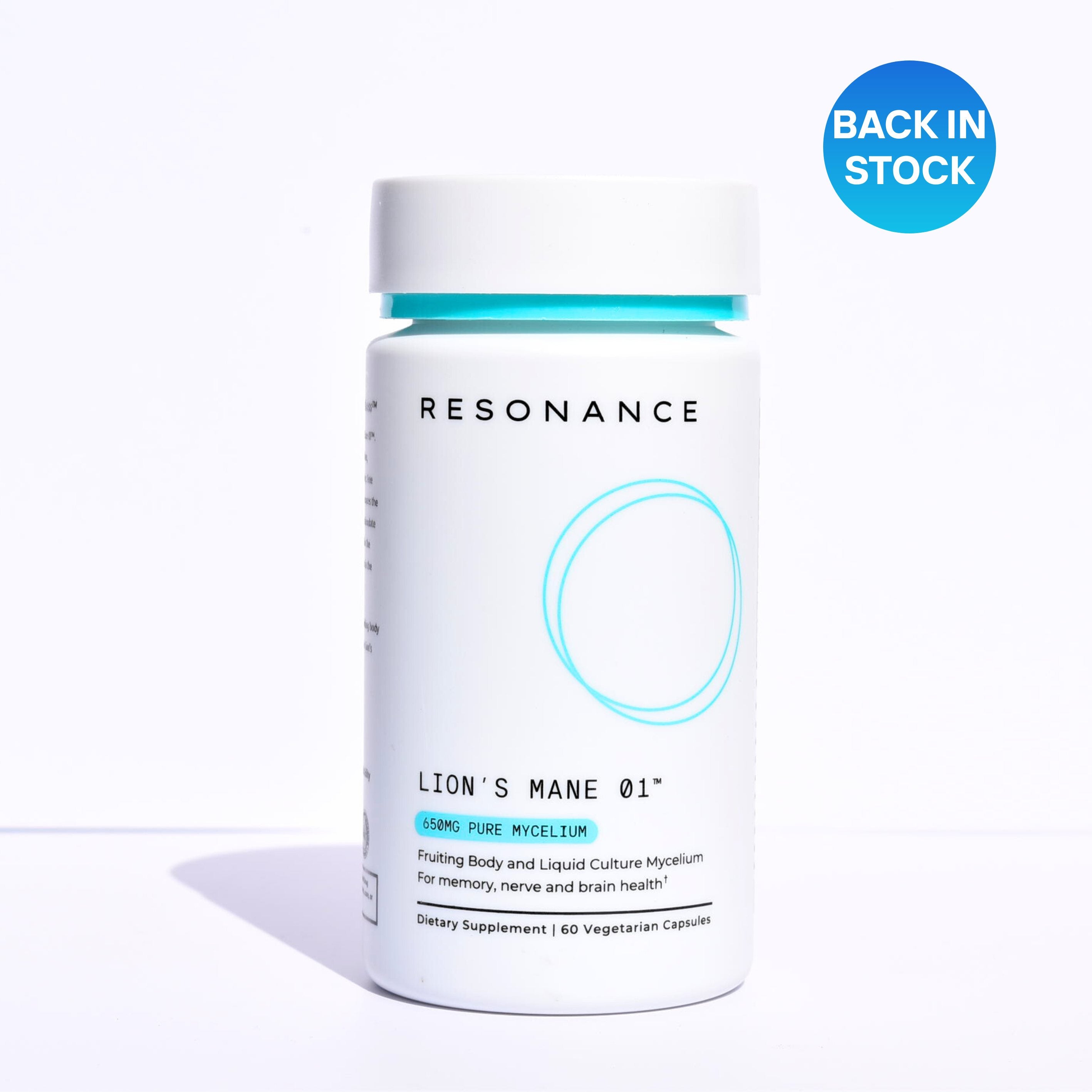
Lion's Mane 01 from Resonance Health is the only lion's mane supplement currently available that meets this standard. By combining fruiting body extract with liquid culture-grown pure mycelium, it provides the full spectrum of NGF-stimulating compounds in their most potent forms. For anyone whose goal is maximizing natural NGF support, the formulation distinction is not a marketing detail. It reflects the science of how lion's mane actually works.
Other Ways to Support NGF Production
While lion's mane is the most direct and potent natural approach to stimulating NGF, other lifestyle factors also influence NGF levels:
- Physical exercise: Regular aerobic exercise has been shown to increase NGF and BDNF levels in the brain. The combination of exercise and lion's mane supplementation may produce additive or synergistic effects on neurotrophic factor production.
- Sleep quality: Adequate sleep supports the brain's restorative processes, including neurotrophic factor production. Sleep deprivation has been associated with reduced NGF signaling.
- Stress management: Chronic stress elevates cortisol, which suppresses NGF production. Stress reduction practices that lower cortisol levels create a more favorable environment for NGF synthesis.
- Anti-inflammatory diet: Reducing chronic inflammation supports the cellular environment in which NGF is produced and functions. Diets rich in omega-3 fatty acids, polyphenols, and antioxidants may help maintain healthy NGF signaling.
Safety Considerations
Lion's mane mushroom has been used as food in East Asia for centuries and has demonstrated excellent safety in clinical research. The studies reviewed in this article, including the 16-week intervention by Mori et al. (2009) and the supplementation trials by Ratto et al. (2019), reported no significant adverse effects. Friedman (2015) reviewed the safety data comprehensively in the Journal of Agricultural and Food Chemistry and affirmed lion's mane's favorable safety profile. Mild gastrointestinal discomfort has been reported in some individuals, particularly when starting supplementation. Individuals with mushroom allergies, those taking anticoagulant or antiplatelet medications, and those with any medical condition should consult a healthcare provider before beginning supplementation.
Frequently Asked Questions
What is Nerve Growth Factor (NGF) and what does it do?
Nerve Growth Factor is a protein neurotrophin that regulates the growth, survival, and function of neurons. It is particularly critical for cholinergic neurons in the basal forebrain, which are essential for memory, attention, and learning. NGF promotes axonal growth, dendritic branching, synaptic plasticity, and neuronal repair. It was discovered by Rita Levi-Montalcini and Stanley Cohen, who received the Nobel Prize for this work in 1986.
Why does NGF decline with age?
NGF levels decrease with aging due to multiple factors: reduced synthesis by astrocytes, impaired retrograde axonal transport from target tissues to neurons, increased neuroinflammation that suppresses NGF production, accumulated oxidative damage to the cellular machinery involved in NGF signaling, and changes in receptor expression. This decline contributes to age-related cognitive changes including memory difficulties and reduced attention span.
How does lion's mane mushroom stimulate NGF production?
Lion's mane contains two families of bioactive compounds that stimulate NGF synthesis. Hericenones, found in the fruiting body, and erinacines, found in the mycelium, both promote NGF production in astrocytes. Erinacine A is particularly significant because it can cross the blood-brain barrier, allowing it to stimulate NGF production directly within the central nervous system when taken orally. This dual-compound capacity is unique to Hericium erinaceus among known natural sources.
What is erinacine A and why is it important?
Erinacine A is a cyathane diterpenoid compound produced by the mycelium of lion's mane mushroom. First isolated by Kawagishi et al. in 1994, it is one of the most potent known natural stimulators of NGF synthesis. Its critical advantage is its ability to cross the blood-brain barrier, a selective membrane that prevents most molecules from entering the brain from the bloodstream. This allows erinacine A to directly promote NGF production in brain tissue rather than being limited to peripheral effects.
Can I get enough erinacine A from eating lion's mane mushrooms?
Eating fresh or dried lion's mane fruiting bodies provides hericenones but not significant amounts of erinacines, which are produced by the mycelium rather than the fruiting body. Additionally, the concentration of erinacines in mycelium depends heavily on growing conditions. Liquid culture methods produce substantially higher concentrations of erinacine A than grain-based cultivation. Concentrated extracts from liquid culture-grown mycelium provide the most reliable source of this compound.
How long does it take for lion's mane to increase NGF levels?
While laboratory studies show that lion's mane compounds stimulate NGF synthesis in cell cultures within hours, the functional cognitive benefits in human clinical trials typically emerge over four to sixteen weeks of consistent supplementation. This timeline reflects the fact that increased NGF must then promote neuronal growth, dendritic branching, and circuit remodeling, all of which are gradual biological processes. Consistency of supplementation is more important than dosage intensity.
What is the difference between grain-grown and liquid culture mycelium?
Grain-grown mycelium is cultivated on rice or oat substrates and is harvested as a mixture of fungal tissue and grain, typically containing 35 to 40 percent grain starch. Liquid culture mycelium is grown in a nutrient broth without grain, producing pure fungal tissue. Research has shown that liquid culture methods produce up to 15 times more erinacines than grain-based cultivation, making liquid culture mycelium significantly more potent for NGF stimulation purposes.
Can NGF supplementation prevent Alzheimer's disease?
The relationship between NGF decline and Alzheimer's disease is well-established in research, and compounds that support NGF production are being actively investigated for neuroprotective potential. Tsai-Teng et al. (2016) demonstrated that erinacine A-enriched lion's mane mycelium had protective effects in animal models relevant to Alzheimer's. However, no clinical trial has yet established that lion's mane supplementation prevents Alzheimer's disease in humans. The evidence supports lion's mane as a tool for maintaining neuronal health and cognitive function, but claims about disease prevention would be premature.
Sources
- Kawagishi, H., Shimada, A., Shirai, R., et al. (1994). Erinacines A, B, and C, strong stimulators of nerve growth factor (NGF)-synthesis, from the mycelia of Hericium erinaceum. Tetrahedron Letters, 35(10), 1569-1572.
- Ma, B.J., Shen, J.W., Yu, H.Y., et al. (2010). Hericenones and erinacines: stimulators of nerve growth factor (NGF) biosynthesis in Hericium erinaceus. Mycology, 1(2), 92-98. DOI: 10.1080/21501201003735556
- Lai, P.L., Naidu, M., Sabaratnam, V., et al. (2013). Neurotrophic properties of the lion's mane medicinal mushroom, Hericium erinaceus. BMC Complementary and Alternative Medicine, 13, 253. DOI: 10.1186/1472-6882-13-253
- Mori, K., Inatomi, S., Ouchi, K., et al. (2009). Improving effects of the mushroom Yamabushitake (Hericium erinaceus) on mild cognitive impairment: a double-blind placebo-controlled clinical trial. Phytotherapy Research, 23(3), 367-372. DOI: 10.1002/ptr.2634
- Tsai-Teng, T., Chin-Chu, C., Li-Ya, L., et al. (2016). Erinacine A-enriched Hericium erinaceus mycelium ameliorates Alzheimer's disease-related pathologies in APPswe/PS1dE9 transgenic mice. Journal of Biomedical Science, 23(1), 49. DOI: 10.1186/s12929-016-0266-z
- Friedman, M. (2015). Chemistry, nutrition, and health-promoting properties of Hericium erinaceus (lion's mane) mushroom fruiting bodies and mycelia and their bioactive compounds. Journal of Agricultural and Food Chemistry, 63(32), 7108-7123. DOI: 10.1021/acs.jafc.5b02914
- Wong, K.H., Naidu, M., David, R.P., et al. (2012). Neuroregenerative potential of lion's mane mushroom, Hericium erinaceus (Bull.: Fr.) Pers. (higher Basidiomycetes), in the treatment of peripheral nerve injury. Journal of Medicinal Food, 15(12), 1060-1073.
- Ratto, D., Corana, F., Mannucci, B., et al. (2019). Hericium erinaceus improves recognition memory and induces hippocampal and cerebellar neurogenesis in frail elderly during a double-blind, placebo-controlled clinical trial. Evidence-Based Complementary and Alternative Medicine, 2019, 3069254.
- He, X., Wang, X., Fang, J., et al. (2017). Structures, biological activities, and industrial applications of the polysaccharides from Hericium erinaceus (lion's mane) mushroom: A review. International Journal of Medicinal Mushrooms, 19(5), 407-422.
- Li, I.C., Lee, L.Y., Tzeng, T.T., et al. (2018). Neurohealth properties of Hericium erinaceus mycelia enriched with erinacines. Behavioural Neurology, 2018, 5802634. DOI: 10.1155/2018/5802634
- Lee, K.F., Chen, J.H., Teng, C.C., et al. (2014). Protective effects of Hericium erinaceus mycelium and its isolated erinacine A against ischemia-injury-induced neuronal cell death via the inhibition of iNOS/p38 MAPK and nitrotyrosine. Evidence-Based Complementary and Alternative Medicine, 2014.
- Nagano, M., Shimizu, K., Kondo, R., et al. (2010). Reduction of depression and anxiety by 4 weeks Hericium erinaceus intake. Biomedical Research, 31(4), 231-237. DOI: 10.2220/biomedres.31.231
- Brandalise, F., Cesaroni, V., Vilber, A., et al. (2017). Dietary supplementation of Hericium erinaceus increases mossy fiber-CA3 hippocampal neurotransmission and recognition memory in wild-type mice. Evidence-Based Complementary and Alternative Medicine, 2017, 3864340.
- Docherty, S., Doughty, F.L., Smith, E.F. (2023). The acute and chronic effects of lion's mane mushroom supplementation on cognitive function, stress and mood in young adults: A double-blind, parallel groups, pilot study. Nutrients, 15(22), 4842. DOI: 10.3390/nu15224842
- Saitsu, Y., Nishide, A., Kikushima, K., et al. (2019). Improvement of cognitive functions by oral intake of Hericium erinaceus. Aging, 11(4), 1142-1154.
- Sheng, X., Yan, J., Meng, Y., et al. (2017). Immunomodulatory effects of Hericium erinaceus derived polysaccharides are mediated by intestinal immunology. International Journal of Biological Macromolecules, 104, 1171-1178.
*These statements have not been evaluated by the Food and Drug Administration. This product is not intended to diagnose, treat, cure, or prevent any disease. Always consult with a qualified healthcare professional before starting any new supplement regimen.


Share:
The Complete Guide to Nerve Growth Factor (NGF) and Why It Matters for Your Brain
Lion's Mane vs. Synthetic Nootropics: Why Natural Brain Support Wins