

The global nootropics market has exploded. Fueled by an increasingly competitive knowledge economy and a culture that prizes cognitive performance, millions of people are now actively seeking ways to think faster, focus longer, and remember more. The options range from prescription pharmaceuticals repurposed as cognitive enhancers to obscure synthetic compounds purchased from online vendors with minimal quality control.
In this crowded landscape, lion's mane mushroom (Hericium erinaceus) occupies a unique position. It is not a stimulant. It does not manipulate neurotransmitter levels through brute pharmacological force. It works through a fundamentally different mechanism, one that supports the biological infrastructure of cognition rather than temporarily overriding its signals. And increasingly, the science suggests that this approach may be not only safer but more effective over the long term than the synthetic alternatives dominating the nootropics conversation.
This article provides a detailed, evidence-based comparison of lion's mane against the most popular categories of synthetic nootropics, examining their mechanisms, efficacy, safety profiles, and sustainability as cognitive enhancement strategies.
Quick Answer
Lion's mane mushroom works by stimulating Nerve Growth Factor (NGF) and Brain-Derived Neurotrophic Factor (BDNF), supporting the structural health of neural circuits rather than temporarily altering neurotransmitter levels. Unlike synthetic nootropics such as racetams, modafinil, or ampakines, lion's mane has extensive safety data, no known dependency risk, and produces benefits that compound over time rather than diminishing with tolerance. The key distinction is mechanism: synthetic nootropics typically modify signaling in existing circuits, while lion's mane builds and maintains the circuits themselves.
Understanding the Two Approaches to Cognitive Enhancement
Before comparing specific compounds, it is essential to understand the fundamental philosophical divide in nootropic strategy.
Signal modification is the approach taken by most synthetic nootropics. These compounds alter neurotransmitter levels, receptor sensitivity, or synaptic signaling to produce acute changes in cognitive function. They work quickly, often within minutes to hours, and their effects are apparent as long as the compound is active in the body. When the compound is cleared, the effects end. With repeated use, the brain often adapts by adjusting receptor density or sensitivity, leading to tolerance and the need for increasing doses.
Structural support is the approach taken by lion's mane. Rather than modifying signals in existing neural circuits, lion's mane stimulates the production of neurotrophic factors that grow, maintain, and repair the circuits themselves. This produces effects that are slower to emerge but more durable, because they reflect actual changes in neuronal structure, dendritic complexity, synaptic density, and myelination. These changes persist even after supplementation pauses, as demonstrated by the gradual decline rather than abrupt cessation of benefits seen in clinical trials.
This distinction is not trivial. It represents the difference between borrowing cognitive capacity from tomorrow (signal modification) and building cognitive capacity for the long term (structural support).
Lion's Mane vs. Racetams
What Are Racetams?
The racetam family, which includes piracetam, aniracetam, oxiracetam, and phenylpiracetam, represents one of the oldest categories of synthetic nootropics. Piracetam was developed in the 1960s by Romanian chemist Corneliu Giurgea, who coined the term "nootropic" to describe it. Racetams modulate AMPA and NMDA glutamate receptors, enhancing excitatory neurotransmission and, in some cases, influencing acetylcholine signaling.
Efficacy Comparison
The evidence base for racetams is surprisingly mixed despite decades of use. A Cochrane review of piracetam for dementia found insufficient evidence to support its use. Some studies have shown modest improvements in memory consolidation and verbal fluency, particularly in populations with existing cognitive impairment, but the effects in healthy individuals are inconsistent and generally small.
Lion's mane, by contrast, has demonstrated statistically significant cognitive improvements in randomized controlled trials. The Mori et al. (2009) study, published in Phytotherapy Research, showed clear cognitive improvements in individuals with mild cognitive impairment over 16 weeks, with the effects clearly attributable to the supplement as demonstrated by their decline during the washout period. Docherty et al. (2023), publishing in Nutrients, found improvements in processing speed and cognitive function in young, healthy adults.
Safety Comparison
Racetams are generally considered to have a low side-effect profile, but they are not without concerns. Reported side effects include headache (often attributed to increased acetylcholine demand), insomnia, anxiety, and gastrointestinal discomfort. Long-term safety data in healthy populations are limited, and racetams remain unregulated as supplements in many countries, raising quality control concerns.
Lion's mane has centuries of documented culinary and medicinal use in East Asia and has demonstrated excellent tolerability across multiple clinical trials. Friedman (2015), in a comprehensive review in the Journal of Agricultural and Food Chemistry, documented the extensive safety profile of lion's mane based on both traditional use and modern clinical data. No serious adverse effects have been reported in published clinical studies.
Mechanism Sustainability
Racetams produce tolerance in many users, with diminishing effects over weeks to months of continuous use. This is a predictable consequence of receptor modulation: the brain adapts to the altered signaling environment by downregulating receptor sensitivity. Lion's mane works through neurotrophic factor stimulation, a mechanism that builds on itself rather than creating compensatory adaptation. The longer you support NGF and BDNF production, the more neural growth and connectivity you accumulate.
Lion's Mane vs. Modafinil
What Is Modafinil?
Modafinil is a wakefulness-promoting agent originally developed for narcolepsy, now widely used off-label as a cognitive enhancer. Its mechanism is complex and not fully understood, but it involves modulation of dopamine, norepinephrine, histamine, and orexin systems. It produces wakefulness, alertness, and improved executive function, particularly under conditions of sleep deprivation.
Efficacy Comparison
Modafinil is effective at what it does. It reliably promotes wakefulness and has been shown to improve certain cognitive functions, particularly in sleep-deprived individuals. However, the evidence for cognitive enhancement in well-rested, healthy individuals is less robust. A systematic review published in European Neuropsychopharmacology concluded that while modafinil improves attention and executive function under sleep deprivation, its benefits for healthy individuals on standard cognitive tasks are more modest and inconsistent.
Lion's mane targets a different dimension of cognitive function. Rather than promoting wakefulness and acute processing speed, it supports the structural underpinnings of cognitive capacity: neuronal health, synaptic density, and neuroplasticity. The Ratto et al. (2019) study, published in Evidence-Based Complementary and Alternative Medicine, demonstrated that lion's mane supplementation in elderly participants was associated with hippocampal and cerebellar neurogenesis, actual growth of new neurons. Modafinil, for all its acute benefits, does not produce structural neuronal changes.
Safety Comparison
Modafinil is a prescription medication with a documented side effect profile. Common adverse effects include headache, nausea, anxiety, insomnia, and dizziness. Rare but serious reactions include Stevens-Johnson syndrome, a potentially life-threatening skin condition. Modafinil also has drug interaction potential, particularly with hormonal contraceptives and anticoagulants.
Modafinil carries a dependency risk that is lower than traditional stimulants but nonzero. Withdrawal symptoms including fatigue, reduced motivation, and cognitive sluggishness have been reported after discontinuation of regular use.
Lion's mane carries none of these risks. It is a food-grade mushroom with no reported cases of serious adverse effects in the clinical literature. The Mori et al. (2009) 16-week trial and the Docherty et al. (2023) study in young adults both reported excellent tolerability with no significant side effects. There is no evidence of dependency, withdrawal, or rebound effects upon cessation.
Legal and Practical Considerations
Modafinil is a Schedule IV controlled substance in the United States and requires a prescription. Obtaining it without a prescription, which many nootropic users do through online pharmacies, raises both legal and quality control concerns. Lion's mane is a legal dietary supplement available without a prescription, though as discussed below, quality varies enormously between products.
Lion's Mane vs. Ampakines and Other Research Chemicals
The Research Chemical Problem
The nootropics community has embraced a growing array of synthetic research chemicals, including ampakines (AMPA receptor modulators), synthetic peptides like Semax and Selank, and novel cholinergic compounds like alpha-GPC and CDP-choline. While some of these compounds have interesting preclinical data, many share a common problem: limited human safety data.
Ampakines, for example, enhance AMPA receptor signaling to boost synaptic transmission and potentially improve memory encoding. Some have shown promise in preclinical and early clinical studies. However, excessive AMPA receptor activation carries a theoretical risk of excitotoxicity, neuronal damage caused by overactivation of glutamate signaling. Long-term safety data in healthy human populations are sparse.
The Safety Advantage of Natural Neurotrophic Support
Lion's mane works through the body's own neurotrophic signaling system. By stimulating astrocytes to produce more NGF and BDNF, it leverages an endogenous pathway that the brain is already designed to use. There is no risk of receptor overstimulation because the mechanism does not involve direct receptor modulation. The neurotrophic factors produced through lion's mane stimulation are the same ones the brain naturally produces, just at enhanced levels.
This is a fundamentally different risk profile than synthetic compounds that directly manipulate receptor signaling. The safety record of lion's mane across centuries of culinary use and decades of clinical research reflects this mechanistic safety advantage.
Lion's Mane vs. Caffeine and L-Theanine
It is worth addressing the most popular nootropic stack in the world: caffeine and L-theanine. This combination is widely recommended in the nootropics community for providing alert, calm focus. Caffeine blocks adenosine receptors to promote wakefulness, while L-theanine modulates GABA and alpha brain wave activity to smooth the jittery quality of caffeine stimulation.
This stack works through signal modification: temporarily blocking fatigue signals (caffeine) and modulating excitatory/inhibitory balance (L-theanine). It produces real, immediate effects on alertness and focus. But it does not build cognitive capacity. It does not support neuronal health. It does not stimulate neurogenesis or synaptic growth. And caffeine tolerance develops reliably, requiring escalating doses or periodic cycling.
Lion's mane and the caffeine/theanine stack operate on entirely different timescales and through entirely different mechanisms. They are not competitors. They are complementary. Caffeine provides immediate alertness. Lion's mane builds the long-term neural infrastructure that makes sustained focus possible regardless of caffeine intake. Combining both approaches addresses both the short-term and long-term dimensions of cognitive performance.
The Long-Term Argument: Building vs. Borrowing
Perhaps the most important distinction between lion's mane and synthetic nootropics is what happens over months and years of use.
Most synthetic nootropics produce tolerance. The brain's homeostatic mechanisms, evolved to maintain stable signaling, actively resist pharmacological perturbation. Receptors downregulate. Enzymes upregulate. The initial effects diminish, and users face a choice between increasing doses (which increases side effect risk), cycling compounds (which produces inconsistent cognitive support), or accepting diminishing returns.
Lion's mane produces the opposite trajectory. Because its mechanism involves structural neural changes, the benefits are cumulative. Each week of consistent NGF and BDNF stimulation promotes additional neuronal growth, dendritic branching, myelination, and synaptic formation. The brain is not resisting these changes. It is responding to neurotrophic signals it evolved to use. The result is cognitive capacity that builds over time rather than fading.
Docherty et al. (2023) observed this pattern in their study, finding that chronic supplementation produced benefits beyond what was seen with acute dosing. The Mori et al. (2009) study showed increasing cognitive improvements at 8, 12, and 16 weeks, consistent with an accumulating neurotrophic effect. This trajectory is the opposite of tolerance. It is compounding.
Why the Source of Lion's Mane Determines Whether It Competes With Synthetics
The comparison between lion's mane and synthetic nootropics only holds if the lion's mane supplement actually delivers the bioactive compounds responsible for its effects. A poor-quality lion's mane product is not a natural alternative to synthetic nootropics. It is a poor alternative to everything.
The Erinacine A Requirement
The neurotrophic benefits of lion's mane, the ones that make it a credible competitor to synthetic nootropics, depend primarily on erinacine A from the mycelium. Kawagishi et al. (1994) first isolated this compound and demonstrated its potent NGF-stimulating activity. Ma et al. (2010) confirmed that erinacines stimulate NGF biosynthesis in astrocytes. Tsai-Teng et al. (2016) showed its neuroprotective effects in animal models.
Without erinacine A, lion's mane provides general neuroprotective and immune-supporting benefits from hericenones and beta-glucans, but it lacks the central mechanism that enables it to compete with compounds designed specifically to enhance cognitive function.
Grain-Grown vs. Liquid Culture Mycelium
The majority of commercial lion's mane mycelium is grown on grain, producing a final product contaminated with 35 to 40 percent grain starch and containing significantly less erinacine A than mycelium grown in liquid culture. Li et al. (2018) documented that liquid culture methods produce substantially higher yields of erinacine A, with some analyses showing up to 15 times more erinacines than grain-grown alternatives.
If you are comparing lion's mane to modafinil or racetams and your lion's mane supplement is mostly rice starch with trace amounts of erinacines, the comparison is unfair to lion's mane. The mushroom loses not because it lacks efficacy, but because the product fails to deliver the compounds that provide that efficacy.
The Complete Formulation
The strongest case for lion's mane as a nootropic comes from supplements that combine fruiting body extract (providing hericenones and beta-glucans) with pure mycelium grown via liquid culture (providing high concentrations of erinacines including erinacine A). This combination delivers the full spectrum of lion's mane bioactive compounds without the grain filler that dilutes potency.
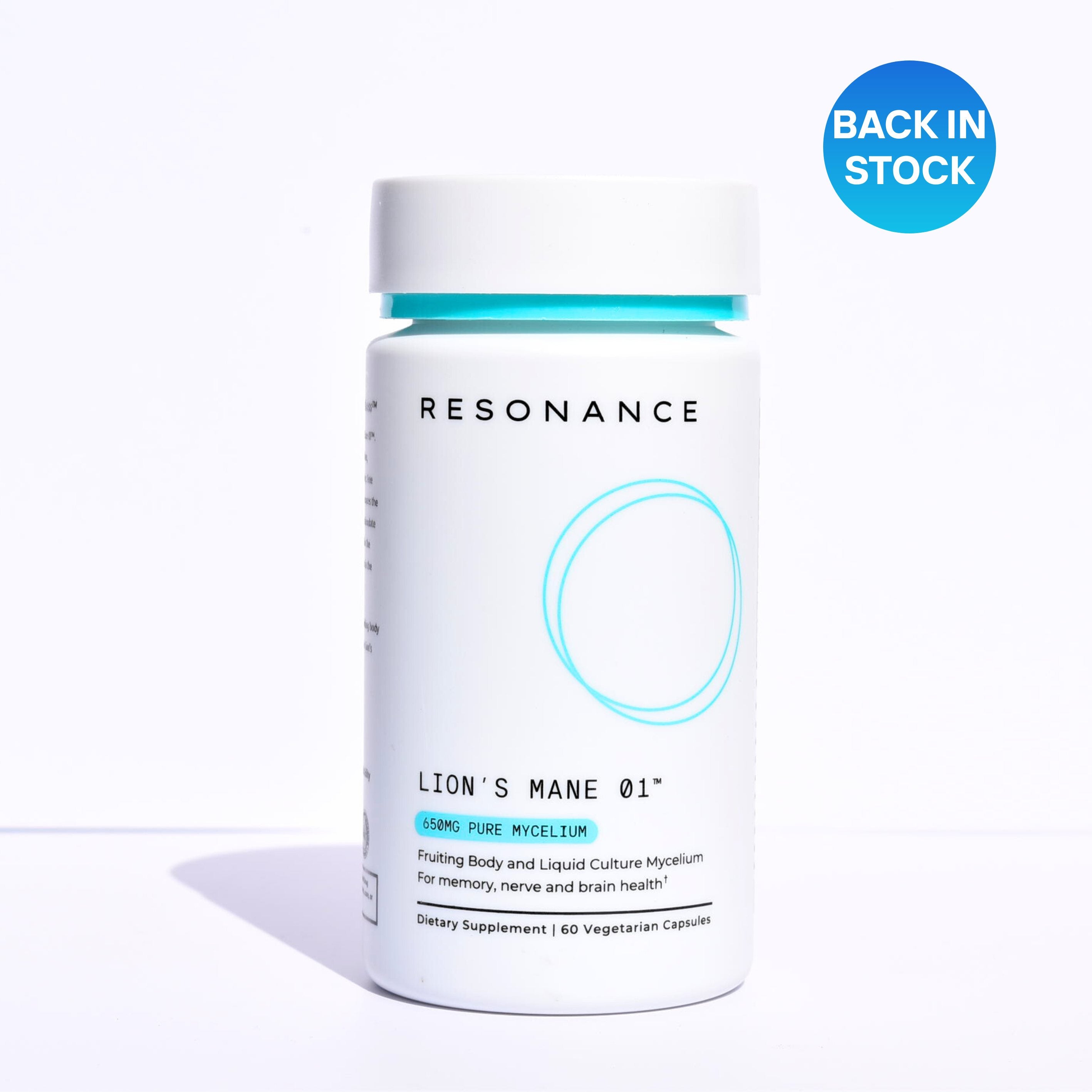
Lion's Mane 01 from Resonance Health is the only lion's mane supplement that combines fruiting body extract with pure liquid culture-grown mycelium. For anyone evaluating lion's mane as a natural alternative or complement to synthetic nootropics, this formulation distinction determines whether the comparison is a fair test of lion's mane's capabilities or a test of a diluted approximation.
A Framework for Choosing Your Cognitive Enhancement Strategy
Rather than presenting lion's mane and synthetic nootropics as binary competitors, here is a nuanced framework for thinking about cognitive enhancement:
For acute performance demands (an important presentation, an exam, a deadline), short-acting compounds like caffeine or, under medical supervision, modafinil may provide immediate benefit. But they borrow from your cognitive capacity rather than building it.
For long-term cognitive health (maintaining focus and memory as you age, building resilient neural infrastructure, supporting recovery from cognitive challenges), lion's mane with adequate erinacine A content offers a scientifically supported approach that works with your brain's biology rather than against its homeostatic mechanisms.
For both, combining acute performance support with long-term neurotrophic supplementation provides both the immediate boost and the structural investment. Lion's mane does not interfere with caffeine or other acute cognitive enhancers, making it suitable as a foundational supplement alongside short-term strategies.
Safety Summary
Lion's mane mushroom has a robust safety profile established through centuries of traditional use and confirmed by multiple clinical trials. Friedman (2015) reviewed the complete safety literature and affirmed its favorable profile. The Mori et al. (2009), Docherty et al. (2023), and Ratto et al. (2019) trials all reported excellent tolerability. No serious adverse effects, dependency, tolerance, or withdrawal phenomena have been documented. Mild gastrointestinal symptoms are the most commonly reported side effect. Individuals with mushroom allergies should avoid lion's mane. Those taking medications, particularly drugs affecting the central nervous system or blood coagulation, should consult their healthcare provider.
Frequently Asked Questions
Is lion's mane as effective as modafinil?
Lion's mane and modafinil work through entirely different mechanisms and are not directly comparable. Modafinil provides acute wakefulness promotion by affecting dopamine, norepinephrine, and orexin systems. Lion's mane provides long-term cognitive support by stimulating NGF and BDNF production, promoting neuronal growth and maintenance. Modafinil is more effective for immediate alertness, especially under sleep deprivation. Lion's mane is more effective for building sustained cognitive capacity over time, with a dramatically superior safety profile and no dependency risk.
Can I take lion's mane with other nootropics?
Lion's mane works through neurotrophic factor stimulation, a mechanism that does not interfere with the receptor-based mechanisms of most other nootropics. It is commonly taken alongside caffeine, L-theanine, and other supplements without reported interactions. However, if you are taking prescription nootropics or medications, consult your healthcare provider before combining them with lion's mane supplementation.
Why do people choose synthetic nootropics over lion's mane?
Synthetic nootropics typically produce faster, more immediately noticeable effects because they work by directly modifying neurotransmitter signaling. Lion's mane works through neurotrophic factor stimulation, which produces structural neural changes over weeks to months. People seeking immediate cognitive enhancement may perceive synthetics as more effective simply because the effects are more acutely apparent. However, the long-term trajectory favors lion's mane: its benefits compound over time while synthetic tolerance typically increases.
Does lion's mane produce tolerance like synthetic nootropics?
No. Lion's mane works by stimulating the production of endogenous neurotrophic factors, a mechanism that produces cumulative structural changes rather than receptor adaptation. Clinical studies have shown increasing benefits over the course of supplementation rather than diminishing returns. The Mori et al. (2009) study found progressively greater cognitive improvements at 8, 12, and 16 weeks. This is the opposite of the tolerance pattern seen with receptor-modulating synthetic nootropics.
Is lion's mane safer than racetams?
Lion's mane has a more extensive safety record than racetams. It has centuries of documented use as a food in East Asia and has demonstrated excellent tolerability in clinical trials lasting up to 16 weeks. Racetams, while generally considered low-risk, lack this depth of long-term safety data in healthy populations and carry a side-effect profile that includes headache, insomnia, and anxiety. Additionally, lion's mane supplements are legal dietary supplements, while the regulatory status of racetams varies by country.
What makes lion's mane different from other natural nootropics like ginkgo biloba or bacopa?
Lion's mane is unique among natural nootropics because of its neurotrophic factor-stimulating mechanism. Ginkgo biloba primarily works through vasodilation and blood flow enhancement. Bacopa monnieri primarily modulates serotonergic and cholinergic signaling. Lion's mane is the only natural compound known to stimulate both NGF and BDNF production through two distinct families of bioactive compounds (hericenones and erinacines), directly supporting the growth and maintenance of neural tissue rather than modifying signaling in existing circuits.
How do I know if my lion's mane supplement is potent enough to compete with synthetics?
The most important factor is whether the supplement contains erinacine A from pure mycelium at meaningful concentrations. Fruiting body-only products lack erinacines entirely. Grain-grown mycelium products contain up to 40 percent grain starch and dramatically less erinacine A than liquid culture-grown mycelium. For lion's mane to deliver the neurotrophic benefits demonstrated in research, the supplement must contain pure, liquid culture-grown mycelium. A formulation that combines this with fruiting body extract provides the complete range of bioactive compounds.
Can lion's mane replace my ADHD medication or prescription nootropic?
Lion's mane should not be used as a replacement for prescription medication without medical supervision. Prescription ADHD medications and nootropics work through well-characterized pharmacological mechanisms and are prescribed for specific clinical indications. Lion's mane provides complementary neurotrophic support that may enhance overall cognitive health alongside existing treatments. Any changes to prescription medication should be discussed with your prescribing physician.
Sources
- Friedman, M. (2015). Chemistry, nutrition, and health-promoting properties of Hericium erinaceus (lion's mane) mushroom fruiting bodies and mycelia and their bioactive compounds. Journal of Agricultural and Food Chemistry, 63(32), 7108-7123. DOI: 10.1021/acs.jafc.5b02914
- Docherty, S., Doughty, F.L., Smith, E.F. (2023). The acute and chronic effects of lion's mane mushroom supplementation on cognitive function, stress and mood in young adults: A double-blind, parallel groups, pilot study. Nutrients, 15(22), 4842. DOI: 10.3390/nu15224842
- Ratto, D., Corana, F., Mannucci, B., et al. (2019). Hericium erinaceus improves recognition memory and induces hippocampal and cerebellar neurogenesis in frail elderly during a double-blind, placebo-controlled clinical trial. Evidence-Based Complementary and Alternative Medicine, 2019, 3069254.
- Mori, K., Inatomi, S., Ouchi, K., et al. (2009). Improving effects of the mushroom Yamabushitake (Hericium erinaceus) on mild cognitive impairment: a double-blind placebo-controlled clinical trial. Phytotherapy Research, 23(3), 367-372. DOI: 10.1002/ptr.2634
- Ma, B.J., Shen, J.W., Yu, H.Y., et al. (2010). Hericenones and erinacines: stimulators of nerve growth factor (NGF) biosynthesis in Hericium erinaceus. Mycology, 1(2), 92-98. DOI: 10.1080/21501201003735556
- Kawagishi, H., Shimada, A., Shirai, R., et al. (1994). Erinacines A, B, and C, strong stimulators of nerve growth factor (NGF)-synthesis, from the mycelia of Hericium erinaceum. Tetrahedron Letters, 35(10), 1569-1572.
- Tsai-Teng, T., Chin-Chu, C., Li-Ya, L., et al. (2016). Erinacine A-enriched Hericium erinaceus mycelium ameliorates Alzheimer's disease-related pathologies in APPswe/PS1dE9 transgenic mice. Journal of Biomedical Science, 23(1), 49. DOI: 10.1186/s12929-016-0266-z
- Li, I.C., Lee, L.Y., Tzeng, T.T., et al. (2018). Neurohealth properties of Hericium erinaceus mycelia enriched with erinacines. Behavioural Neurology, 2018, 5802634. DOI: 10.1155/2018/5802634
- Lai, P.L., Naidu, M., Sabaratnam, V., et al. (2013). Neurotrophic properties of the lion's mane medicinal mushroom, Hericium erinaceus. BMC Complementary and Alternative Medicine, 13, 253. DOI: 10.1186/1472-6882-13-253
- Brandalise, F., Cesaroni, V., Vilber, A., et al. (2017). Dietary supplementation of Hericium erinaceus increases mossy fiber-CA3 hippocampal neurotransmission and recognition memory in wild-type mice. Evidence-Based Complementary and Alternative Medicine, 2017, 3864340.
- Nagano, M., Shimizu, K., Kondo, R., et al. (2010). Reduction of depression and anxiety by 4 weeks Hericium erinaceus intake. Biomedical Research, 31(4), 231-237. DOI: 10.2220/biomedres.31.231
- Wong, K.H., Naidu, M., David, R.P., et al. (2012). Neuroregenerative potential of lion's mane mushroom, Hericium erinaceus (Bull.: Fr.) Pers. (higher Basidiomycetes), in the treatment of peripheral nerve injury. Journal of Medicinal Food, 15(12), 1060-1073.
- He, X., Wang, X., Fang, J., et al. (2017). Structures, biological activities, and industrial applications of the polysaccharides from Hericium erinaceus (lion's mane) mushroom: A review. International Journal of Medicinal Mushrooms, 19(5), 407-422.
- Saitsu, Y., Nishide, A., Kikushima, K., et al. (2019). Improvement of cognitive functions by oral intake of Hericium erinaceus. Aging, 11(4), 1142-1154.
- Chiu, C.H., Chyau, C.C., Chen, C.C., et al. (2018). Erinacine A-enriched Hericium erinaceus mycelium produces antidepressant-like effects through modulating BDNF/PI3K/Akt/GSK-3beta signaling in mice. Journal of Clinical Psychopharmacology, 38(5), 458-464.
*These statements have not been evaluated by the Food and Drug Administration. This product is not intended to diagnose, treat, cure, or prevent any disease. Always consult with a qualified healthcare professional before starting any new supplement regimen.


Share:
The Complete Guide to Nerve Growth Factor (NGF) and Why It Matters for Your Brain
How Lion's Mane Supports Gut Health Through the Microbiome