

The inability to focus is one of the most frustrating cognitive experiences a person can have. You sit down to work, and within minutes your attention has drifted. You reread the same paragraph three times without retaining a single sentence. You open your laptop with a clear intention, and twenty minutes later you are five browser tabs deep into something entirely unrelated. For the estimated 366 million adults worldwide living with Attention Deficit Hyperactivity Disorder (ADHD), this is not an occasional annoyance. It is a daily reality that affects careers, relationships, and quality of life.
Lion's mane mushroom (Hericium erinaceus) has emerged as one of the most scientifically interesting natural compounds for cognitive support, and researchers are paying particular attention to its potential relevance for focus and attention. Unlike caffeine, which provides temporary stimulation, or prescription stimulants, which manipulate dopamine and norepinephrine through powerful pharmacological mechanisms, lion's mane appears to support attention through a fundamentally different pathway: by nourishing the biological infrastructure that makes sustained focus possible in the first place.
This article examines what the research actually shows, why the mechanism matters, and what you need to know to make an informed decision about lion's mane for focus and ADHD support.
Quick Answer
Lion's mane mushroom stimulates the production of Nerve Growth Factor (NGF) and Brain-Derived Neurotrophic Factor (BDNF), two proteins essential for the health of neural circuits governing attention and executive function. Clinical research has demonstrated improvements in cognitive performance, processing speed, and recognition memory in human trials. The key bioactive compound, erinacine A, is found in pure mycelium grown via liquid culture and can cross the blood-brain barrier. Lion's mane is not a replacement for ADHD medication but may offer complementary neurotrophic support for focus and attention.
Understanding Focus: What Actually Happens in the Brain
Before examining how lion's mane affects focus, it helps to understand what sustained attention requires at the neurological level. Focus is not a single process. It is the coordinated output of multiple brain networks working in concert.
The prefrontal cortex (PFC) serves as the command center for executive function, including working memory, task switching, impulse control, and sustained attention. The anterior cingulate cortex monitors for conflicts and errors, keeping you on track when distractions arise. The parietal cortex manages spatial attention, helping you orient to relevant information. And the default mode network (DMN) must be appropriately suppressed during focused tasks to prevent mind-wandering.
All of these systems depend on healthy neurons with robust dendritic connections, adequate neurotransmitter signaling, and well-maintained myelin sheaths. When any component degrades, whether through aging, chronic stress, neuroinflammation, or neurodevelopmental differences like ADHD, the result is impaired focus.
In ADHD specifically, research has identified differences in dopaminergic and noradrenergic signaling in the prefrontal cortex, as well as structural and functional differences in the neural networks governing attention. But increasingly, researchers are also looking at the role of neurotrophic factors, the growth proteins that maintain and repair the very circuits involved.
NGF, BDNF, and the Neurotrophic Theory of Attention
Nerve Growth Factor (NGF) and Brain-Derived Neurotrophic Factor (BDNF) are two of the most important neurotrophins in the human brain. They serve complementary but distinct roles in maintaining cognitive function.
NGF is critical for the survival and maintenance of cholinergic neurons in the basal forebrain. These neurons project widely into the cortex and are fundamentally involved in attention, arousal, and learning. When NGF levels decline, cholinergic neurons atrophy, and attentional capacity diminishes. This is one of the earliest changes observed in age-related cognitive decline and in neurodegenerative conditions.
BDNF plays a broader role in synaptic plasticity, the brain's ability to strengthen or weaken connections based on use. It is essential for long-term potentiation, the cellular mechanism underlying learning and memory. BDNF also supports the growth of new dendritic spines, which increase the connectivity and processing capacity of neural circuits.
Research has found that individuals with ADHD often show altered levels of BDNF, suggesting that neurotrophic support may be relevant to the condition's underlying neurobiology. While lion's mane is not a treatment for ADHD, its ability to stimulate both NGF and BDNF production makes it a compelling candidate for supporting the neural infrastructure on which attention depends.
What the Clinical Research Shows
Docherty et al. (2023): Acute and Chronic Cognitive Effects
One of the most recent and rigorous studies on lion's mane and cognitive function was published by Docherty, Doughty, and Smith in Nutrients in 2023. This double-blind, parallel-groups pilot study examined both the acute and chronic effects of lion's mane supplementation on cognitive function, stress, and mood in young adults.
The results were notable. Participants taking lion's mane showed improvements in processing speed and attention measures. The researchers also observed a trend toward reduced subjective stress, which is relevant given that stress directly impairs prefrontal cortex function and attentional capacity. The study design, including both acute single-dose testing and chronic supplementation, provided insight into the different timescales at which lion's mane may exert its effects.
The acute improvements in processing speed suggest that lion's mane may have some immediate bioactive effects beyond the longer-term neurotrophic mechanisms. The chronic supplementation results align with what would be expected from sustained NGF and BDNF stimulation: gradual improvement in neural circuit function over weeks of consistent use.
Mori et al. (2009): Cognitive Improvement in Mild Cognitive Impairment
The landmark study by Mori and colleagues, published in Phytotherapy Research in 2009, was a double-blind, placebo-controlled trial examining lion's mane in Japanese adults aged 50 to 80 with mild cognitive impairment. Participants received lion's mane tablets or placebo for 16 weeks, followed by a 4-week washout period.
The lion's mane group showed significantly improved cognitive function scores at weeks 8, 12, and 16 compared to placebo. Critically, cognitive scores declined during the washout period after supplementation stopped, strongly suggesting that the cognitive improvements were directly attributable to the lion's mane rather than to placebo effects or natural variation.
While this study focused on an older population with existing cognitive impairment rather than specifically on focus or ADHD, the findings are relevant because the cognitive assessments included measures of attention, concentration, and mental processing, all of which are central to the experience of focus.
Brandalise et al. (2017): Recognition Memory Enhancement
Brandalise and colleagues published research in Evidence-Based Complementary and Alternative Medicine in 2017 examining lion's mane and recognition memory. Their preclinical work demonstrated that lion's mane supplementation enhanced recognition memory performance and was associated with increased expression of neurotrophic factors.
Recognition memory is the ability to identify previously encountered information, and it depends on the integrity of hippocampal and cortical circuits that overlap significantly with the networks involved in sustained attention. The finding that lion's mane enhanced this capacity while simultaneously upregulating neurotrophic factor expression provides mechanistic support for the cognitive benefits observed in human trials.
Saitsu et al. (2019): Cognitive Function in Older Adults
Saitsu and colleagues published findings in Aging in 2019 from a study examining oral intake of Hericium erinaceus and cognitive function. Their results showed improvements in cognitive test scores in participants receiving lion's mane supplementation, further building the evidence base for the mushroom's neurocognitive effects and demonstrating reproducibility across different study populations.
Lion's Mane and ADHD: What We Know and What We Do Not
It is important to state clearly that no published clinical trial has specifically studied lion's mane as a treatment for ADHD. The relevance of lion's mane to ADHD is based on its demonstrated mechanisms of action, its effects on cognitive functions that overlap with ADHD symptoms, and the theoretical framework connecting neurotrophic factor support to attentional capacity.
That said, the convergence of evidence is compelling. Lion's mane stimulates NGF and BDNF, both of which support neural circuits impaired in ADHD. It has demonstrated improvements in attention-related cognitive measures in clinical trials. It reduces anxiety and stress, both of which exacerbate ADHD symptoms. And unlike stimulant medications, it achieves these effects without direct manipulation of dopamine or norepinephrine reuptake, meaning it works through a complementary pathway.
For individuals with ADHD who are seeking adjunctive support alongside their existing treatment plan, or for those with subclinical attention difficulties who want to support their cognitive function naturally, lion's mane represents a scientifically grounded option worth discussing with a healthcare provider.
How Lion's Mane Compares to Common Focus-Enhancing Strategies
Lion's Mane vs. Caffeine
Caffeine blocks adenosine receptors, temporarily preventing the feeling of tiredness and providing a short-term boost in alertness. It does not support neuronal health, does not stimulate neurotrophic factor production, and its effects diminish as tolerance develops. Lion's mane works through an entirely different mechanism, supporting the structural integrity of the neural circuits that enable focus rather than temporarily altering their signaling. The two are not mutually exclusive and could theoretically complement each other.
Lion's Mane vs. L-Theanine
L-theanine, commonly found in green tea, promotes alpha brain wave activity and has mild calming effects that can reduce the jittery quality of caffeine-enhanced focus. It works through GABA and glutamate modulation. Lion's mane operates on a different timescale and through different mechanisms, supporting long-term neural circuit health rather than acute neurotransmitter modulation. Again, these approaches are complementary rather than competing.
Lion's Mane vs. Prescription Stimulants
Prescription ADHD medications such as methylphenidate (Ritalin) and amphetamine-based compounds (Adderall) work by increasing dopamine and norepinephrine availability in the prefrontal cortex. They are powerful, well-studied, and effective for many people. Lion's mane does not and should not be positioned as an alternative to these medications for diagnosed ADHD. However, its neurotrophic mechanism offers a fundamentally different type of support, one focused on maintaining and growing the neural infrastructure rather than acutely modulating neurotransmitter levels. For some individuals, this complementary approach may be valuable as part of a broader cognitive support strategy.
Why the Source of Your Lion's Mane Determines Whether It Works
The cognitive benefits demonstrated in research depend on the presence of specific bioactive compounds, particularly erinacine A from the mycelium and hericenones from the fruiting body. Not all lion's mane supplements deliver these compounds in meaningful quantities.
The Erinacine A Requirement
Erinacine A is arguably the most important compound for cognitive and focus-related benefits because it is one of the few natural molecules that can cross the blood-brain barrier and directly stimulate NGF production in the central nervous system. The original isolation of erinacines by Kawagishi et al. (1994) in Tetrahedron Letters established their potent NGF-stimulating activity. Subsequent research by Ma et al. (2010) confirmed that these compounds promote NGF biosynthesis, and Tsai-Teng et al. (2016), publishing in the Journal of Biomedical Science, demonstrated the neuroprotective effects of erinacine A in animal models of neurodegeneration.
Erinacine A is produced by the mycelium, not the fruiting body. Supplements containing only fruiting body extract, while beneficial for other reasons, will not deliver this compound.
Liquid Culture vs. Grain-Grown: A Critical Distinction
Among mycelium-containing supplements, the cultivation method determines the concentration of erinacines. The majority of commercial lion's mane mycelium is grown on grain, typically rice or oats. The mycelium permeates the grain substrate, and the final product is harvested as a mixture of fungal tissue and grain. Testing has revealed that these products often contain 35 to 40 percent grain starch, which dilutes the concentration of bioactive compounds.
Li et al. (2018) demonstrated that liquid culture cultivation methods produce significantly higher concentrations of erinacine A compared to grain-based methods. Some analyses have shown up to a 15-fold difference in erinacine content between liquid culture and grain-grown mycelium. For anyone seeking the cognitive and focus-related benefits of lion's mane, this is not a trivial distinction. It is the difference between a product that contains the studied compounds and one that is primarily starch.
The Complete Spectrum Approach
The most effective lion's mane supplementation strategy combines fruiting body extract, which provides hericenones and beta-glucans for neuroprotection and immune support, with pure mycelium grown via liquid culture, which provides high concentrations of erinacines including erinacine A for direct NGF stimulation in the brain.
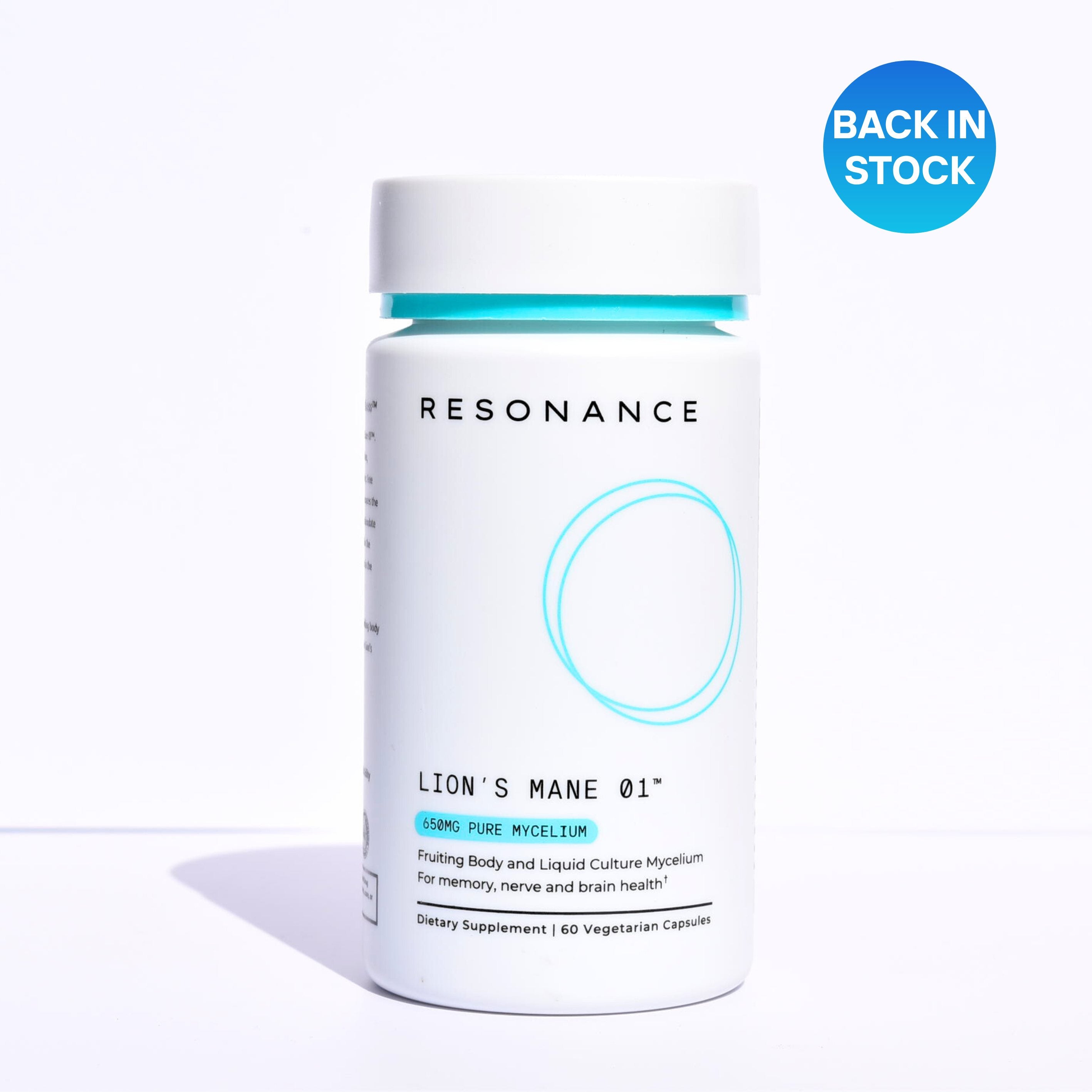
Lion's Mane 01 from Resonance Health is the only supplement currently available that combines fruiting body extract with pure liquid culture-grown mycelium. This is not an incidental formulation choice. It reflects the scientific evidence showing that the full range of bioactive compounds, from both parts of the organism, delivered in their most potent forms, provides the most comprehensive neurotrophic support available from a single lion's mane product.
Practical Recommendations for Focus Support
Consistency over intensity: The neurotrophic benefits of lion's mane develop over weeks of regular use as NGF and BDNF stimulate neuronal growth and circuit remodeling. Daily supplementation is more important than large sporadic doses.
Realistic expectations: Lion's mane supports the biological foundation of focus. It does not produce the immediate, dramatic alertness of a stimulant. Think of it as building capacity rather than flipping a switch. Most clinical studies show measurable cognitive improvements emerging over four to eight weeks.
Complementary strategies: Combine lion's mane with evidence-based focus practices such as time-blocking, regular physical exercise (which also boosts BDNF), adequate sleep, and stress management techniques. These approaches all converge on supporting prefrontal cortex function through different but complementary pathways.
Talk to your doctor: If you have diagnosed ADHD and are considering lion's mane as part of your management strategy, discuss it with your prescribing physician. It should be considered a complement to, not a replacement for, evidence-based ADHD treatment.
Safety Profile
Lion's mane has demonstrated excellent tolerability in clinical research. The Mori et al. (2009) study reported no significant adverse effects over 16 weeks of supplementation. The Docherty et al. (2023) study similarly found lion's mane to be well tolerated in young adults. Friedman (2015), in a comprehensive review published in the Journal of Agricultural and Food Chemistry, affirmed the safety profile of lion's mane based on its extensive history of culinary use and its performance in clinical trials. Mild gastrointestinal symptoms have been occasionally reported. Individuals with mushroom allergies should avoid lion's mane, and those on medications should consult their healthcare provider.
Frequently Asked Questions
Can lion's mane help with ADHD?
Lion's mane has not been specifically studied as a treatment for ADHD in clinical trials. However, it stimulates Nerve Growth Factor and Brain-Derived Neurotrophic Factor, both of which support the neural circuits involved in attention and executive function. Clinical studies have shown improvements in cognitive processing speed, attention measures, and recognition memory with lion's mane supplementation. For individuals with ADHD, lion's mane may offer complementary neurotrophic support alongside conventional treatment, but it should not be considered a replacement for evidence-based ADHD therapies.
How does lion's mane improve focus?
Lion's mane improves focus through neurotrophic factor stimulation rather than acute neurotransmitter manipulation. Its bioactive compounds, particularly erinacine A from the mycelium and hericenones from the fruiting body, stimulate the production of NGF and BDNF. These growth proteins support the health, maintenance, and growth of neurons in the prefrontal cortex, basal forebrain, and hippocampus, all of which are critical for sustained attention and executive function. This mechanism produces gradual, cumulative improvements rather than immediate stimulant-like effects.
How long does it take for lion's mane to improve focus?
The Docherty et al. (2023) study found some acute cognitive improvements with a single dose, but the more substantial and consistent benefits appear with chronic supplementation over four to eight weeks. This timeline reflects the neurotrophic mechanism: stimulating neuronal growth, dendritic branching, and circuit remodeling takes time. Most researchers and practitioners recommend committing to at least eight weeks of consistent daily supplementation before evaluating results.
Is lion's mane better than caffeine for focus?
Lion's mane and caffeine work through completely different mechanisms and are not directly comparable. Caffeine provides temporary alertness by blocking adenosine receptors, with effects lasting a few hours. Lion's mane supports long-term neural circuit health through neurotrophic factor stimulation, with benefits accumulating over weeks. They are complementary rather than competing approaches. Caffeine is better for acute, short-term alertness. Lion's mane is better for building sustained cognitive capacity over time.
What is the best lion's mane dosage for focus?
Clinical studies showing cognitive benefits have typically used doses ranging from 500 mg to 3,000 mg per day of lion's mane extract. The specific effective dosage depends heavily on the quality and composition of the supplement, particularly the concentration of bioactive compounds like erinacine A. A supplement with pure liquid culture-grown mycelium and verified erinacine content may be effective at lower doses than a grain-diluted product, simply because the active compounds are more concentrated.
Can students take lion's mane for studying?
Lion's mane is a food-grade mushroom with a strong safety profile in clinical research. For students seeking cognitive support, lion's mane offers a non-stimulant option that supports neural health without the side effects associated with excessive caffeine or other stimulants. The Docherty et al. (2023) study was specifically conducted in young adults and found improvements in cognitive function with good tolerability. As with any supplement, students should consult a healthcare provider, particularly if taking other medications.
Does lion's mane work for brain fog?
Brain fog, characterized by difficulty concentrating, mental cloudiness, and reduced processing speed, can arise from multiple causes including stress, poor sleep, neuroinflammation, and nutrient deficiencies. Lion's mane addresses several of these factors by stimulating neurotrophic factors, reducing neuroinflammation, and supporting neuroplasticity. The improvements in cognitive processing speed observed in clinical trials are directly relevant to the experience of brain fog. The most important factor is ensuring your supplement contains the bioactive compounds shown to produce these effects, particularly erinacine A from pure mycelium.
Why do some lion's mane supplements not help with focus?
The most common reason is insufficient bioactive compound content. Supplements containing only fruiting body lack erinacine A entirely. Grain-grown mycelium products may contain 35 to 40 percent grain starch and dramatically lower concentrations of erinacines. The clinical studies demonstrating cognitive benefits used verified, high-quality extracts. A supplement that does not contain adequate levels of the compounds studied in that research should not be expected to produce the same results.
Sources
- Docherty, S., Doughty, F.L., Smith, E.F. (2023). The acute and chronic effects of lion's mane mushroom supplementation on cognitive function, stress and mood in young adults: A double-blind, parallel groups, pilot study. Nutrients, 15(22), 4842. DOI: 10.3390/nu15224842
- Mori, K., Inatomi, S., Ouchi, K., et al. (2009). Improving effects of the mushroom Yamabushitake (Hericium erinaceus) on mild cognitive impairment: a double-blind placebo-controlled clinical trial. Phytotherapy Research, 23(3), 367-372. DOI: 10.1002/ptr.2634
- Brandalise, F., Cesaroni, V., Vilber, A., et al. (2017). Dietary supplementation of Hericium erinaceus increases mossy fiber-CA3 hippocampal neurotransmission and recognition memory in wild-type mice. Evidence-Based Complementary and Alternative Medicine, 2017, 3864340. DOI: 10.1155/2017/3864340
- Ma, B.J., Shen, J.W., Yu, H.Y., et al. (2010). Hericenones and erinacines: stimulators of nerve growth factor (NGF) biosynthesis in Hericium erinaceus. Mycology, 1(2), 92-98. DOI: 10.1080/21501201003735556
- Kawagishi, H., Shimada, A., Shirai, R., et al. (1994). Erinacines A, B, and C, strong stimulators of nerve growth factor (NGF)-synthesis, from the mycelia of Hericium erinaceum. Tetrahedron Letters, 35(10), 1569-1572.
- Tsai-Teng, T., Chin-Chu, C., Li-Ya, L., et al. (2016). Erinacine A-enriched Hericium erinaceus mycelium ameliorates Alzheimer's disease-related pathologies in APPswe/PS1dE9 transgenic mice. Journal of Biomedical Science, 23(1), 49. DOI: 10.1186/s12929-016-0266-z
- Lai, P.L., Naidu, M., Sabaratnam, V., et al. (2013). Neurotrophic properties of the lion's mane medicinal mushroom, Hericium erinaceus. BMC Complementary and Alternative Medicine, 13, 253. DOI: 10.1186/1472-6882-13-253
- Friedman, M. (2015). Chemistry, nutrition, and health-promoting properties of Hericium erinaceus (lion's mane) mushroom fruiting bodies and mycelia and their bioactive compounds. Journal of Agricultural and Food Chemistry, 63(32), 7108-7123. DOI: 10.1021/acs.jafc.5b02914
- Saitsu, Y., Nishide, A., Kikushima, K., et al. (2019). Improvement of cognitive functions by oral intake of Hericium erinaceus. Aging, 11(4), 1142-1154.
- Li, I.C., Lee, L.Y., Tzeng, T.T., et al. (2018). Neurohealth properties of Hericium erinaceus mycelia enriched with erinacines. Behavioural Neurology, 2018, 5802634. DOI: 10.1155/2018/5802634
- Chiu, C.H., Chyau, C.C., Chen, C.C., et al. (2018). Erinacine A-enriched Hericium erinaceus mycelium produces antidepressant-like effects through modulating BDNF/PI3K/Akt/GSK-3beta signaling in mice. Journal of Clinical Psychopharmacology, 38(5), 458-464.
- Nagano, M., Shimizu, K., Kondo, R., et al. (2010). Reduction of depression and anxiety by 4 weeks Hericium erinaceus intake. Biomedical Research, 31(4), 231-237. DOI: 10.2220/biomedres.31.231
- He, X., Wang, X., Fang, J., et al. (2017). Structures, biological activities, and industrial applications of the polysaccharides from Hericium erinaceus (lion's mane) mushroom: A review. International Journal of Medicinal Mushrooms, 19(5), 407-422.
- Wong, K.H., Naidu, M., David, R.P., et al. (2012). Neuroregenerative potential of lion's mane mushroom, Hericium erinaceus (Bull.: Fr.) Pers. (higher Basidiomycetes), in the treatment of peripheral nerve injury. Journal of Medicinal Food, 15(12), 1060-1073.
- Ratto, D., Corana, F., Mannucci, B., et al. (2019). Hericium erinaceus improves recognition memory and induces hippocampal and cerebellar neurogenesis in frail elderly during a double-blind, placebo-controlled clinical trial. Evidence-Based Complementary and Alternative Medicine, 2019, 3069254.
*These statements have not been evaluated by the Food and Drug Administration. This product is not intended to diagnose, treat, cure, or prevent any disease. Always consult with a qualified healthcare professional before starting any new supplement regimen.


Share:
Lion's Mane and Sleep Quality: What the Science Actually Says
The Complete Guide to Nerve Growth Factor (NGF) and Why It Matters for Your Brain