
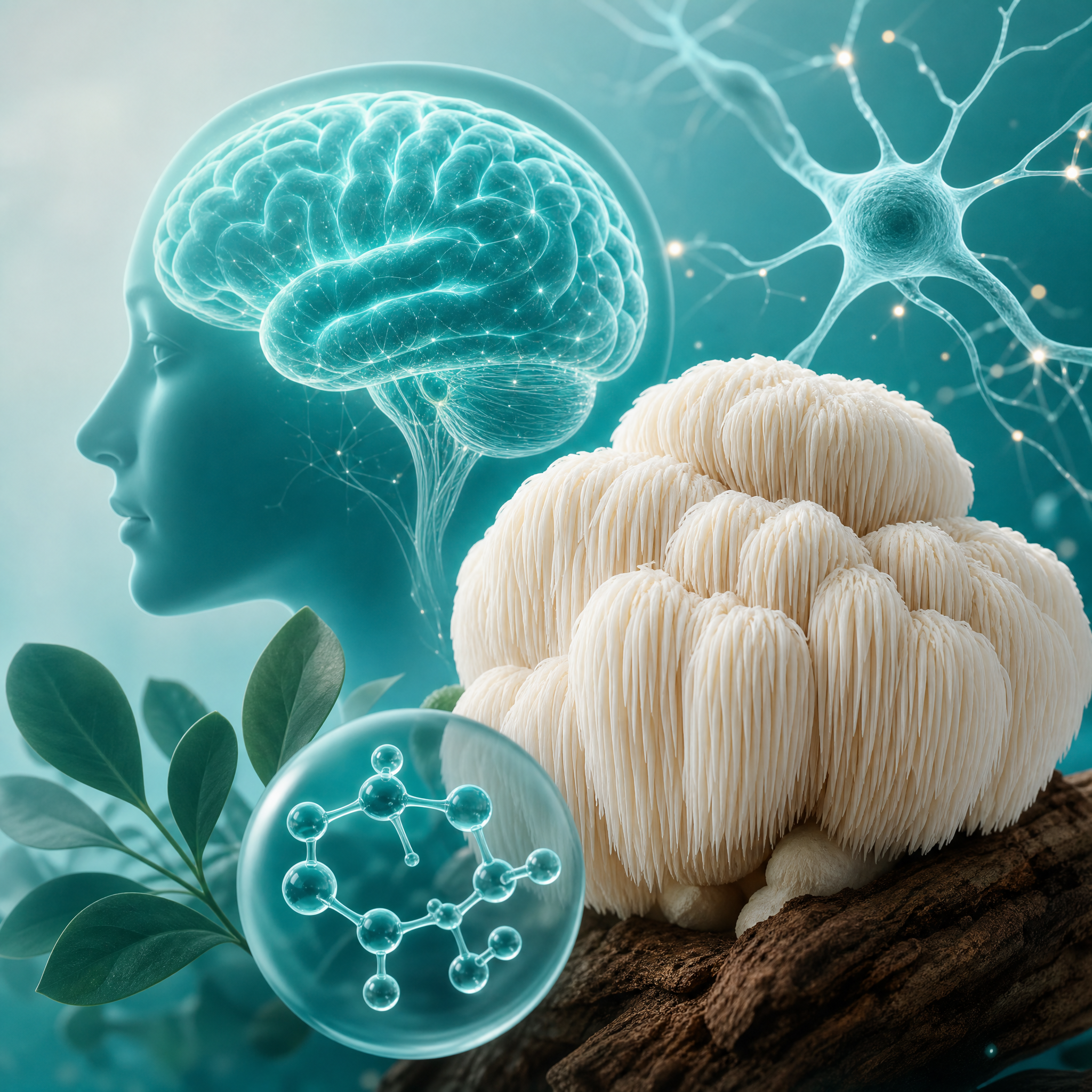
What Is Erinacine A? The Lion's Mane Compound Scientists Are Watching
If you've researched lion's mane seriously, you've probably run into a tongue-twister of a name: erinacine A. It shows up in study abstracts and on better product labels, usually without much explanation. So here's the plain-language version of what it is and why it matters.
The short answer
Erinacine A is one of the key bioactive compounds found in lion's mane mushroom — specifically concentrated in the mycelium (the root-like network), not the part you'd see on a dinner plate. It belongs to a family of molecules called diterpenoids, and it's one of the main reasons researchers got interested in this mushroom's effects on the brain in the first place.
Why scientists care about it
Most of the headline research on lion's mane and cognition traces back, directly or indirectly, to compounds like erinacine A. In laboratory studies, it's been shown to be capable of crossing into the brain and stimulating nerve growth factor (NGF) — a protein essential for the growth, maintenance, and survival of neurons.
Think of NGF as part of your brain's repair-and-maintenance crew. The hypothesis driving the research is that by supporting NGF activity, erinacine A may support the brain's natural ability to maintain healthy neurons — which is why it's studied in the context of memory, focus, and long-term cognitive health.
It's important to be precise here: much of the most striking erinacine A research has been done in laboratory and animal models. The human research is earlier and ongoing. It's a genuinely promising compound, not a proven cure for anything — and honest brands say so.
Why this is where most products fall apart
Here's the practical problem. Because erinacine A concentrates in the mycelium and only forms under specific growing conditions, most lion's mane supplements contain little to none of it — and never tell you the amount.
A label that just says "lion's mane extract 1,000mg" tells you nothing about whether the active compounds researchers actually study are present. It's like buying orange juice labeled only "fruit, 1,000mg." The dose without the actual active is marketing, not science.
What a serious product looks like
If erinacine A is what the research is built on, a serious lion's mane product should:
- Use the mycelium, where erinacine A concentrates — ideally a grain-free, liquid-cultured mycelium so you're getting the mushroom's compounds, not leftover growing substrate.
- Include the fruiting body too, for the broader spectrum of beneficial compounds like hericenones.
- Verify and disclose the erinacine A content through testing, rather than hiding behind a vague "extract" number.
- Publish a certificate of analysis so you can see what's actually in the bottle.
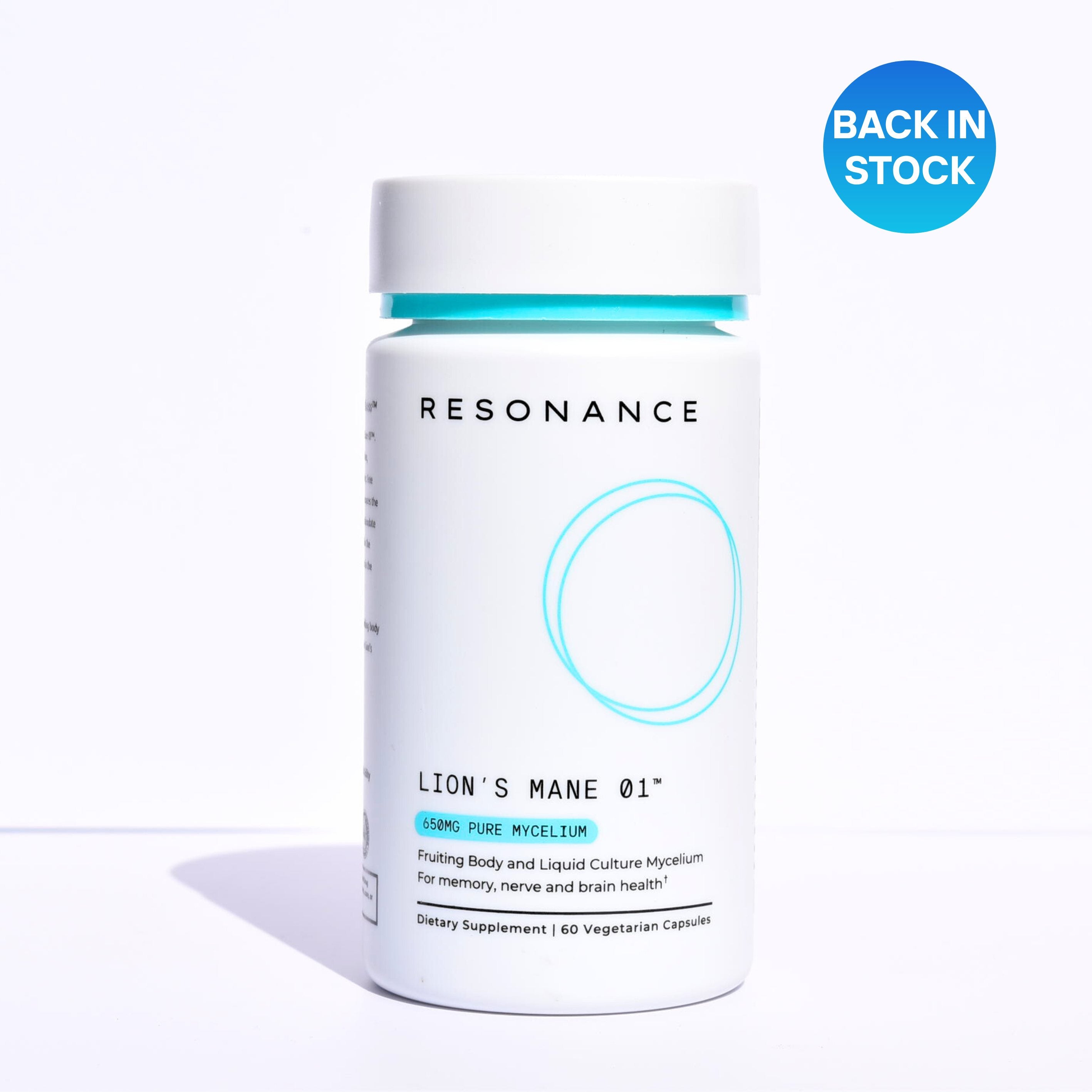
This is exactly why we formulated Lion's Mane 01™ as a dual extract — a grain-free liquid-cultured mycelium plus fruiting body — with verified erinacine A content and third-party batch testing. When the entire scientific story rests on a specific compound, we think you deserve to know how much of it you're actually getting.
The takeaway
Erinacine A is the quiet protagonist of the lion's mane story — the compound that turned an ancient mushroom into a subject of modern brain research. The science is early but legitimately exciting. And when you shop, it's the single best lens for telling a serious lion's mane product apart from a label-deep one: does it prove the erinacine A is in there, or just hope you won't ask?
This article is for educational purposes and is not medical advice. Lion's Mane 01™ is a dietary supplement and is not intended to diagnose, treat, cure, or prevent any disease.


Share:
How to Improve Focus and Concentration Naturally: 9 Evidence-Based Habits
Brain Fog: 7 Common Causes and What Actually Helps